African Union – European Union (AU-EU) and their partners gathered for the 6th Reference Group on Infrastructure meeting to discuss the infrastructure agenda of the AU-EU Partnership in Addis Ababa on May 17-18, 2018. The partners of the meeting recognised that the AU-EU Partnership plays a very essential role in steering the AU-EU cross-sectoral infrastructure agenda and also stressed the importance of the Abidjan Action Plan 2018-2020 as strategic roadmap and framework of cooperation for that period.
The partners emphasized the importance of intra-African trade and support the advancing of greater economic integration by further developing sustainable connectivity especially building on the Programme for Infrastructure Development for Africa – Program for Infrastructure Development in Africa and NEPAD programmes.
The AU and EU expressed joined commitments to guide and support the preparation of a new medium term PIDA strategic foundation for the period 2020-2030, inter alia the PIDA Priority Action Plan II and other supporting PIDA instruments, that build on the lessons learnt of ongoing programmes established through the PIDA PAP I Mid Term Review. Read More
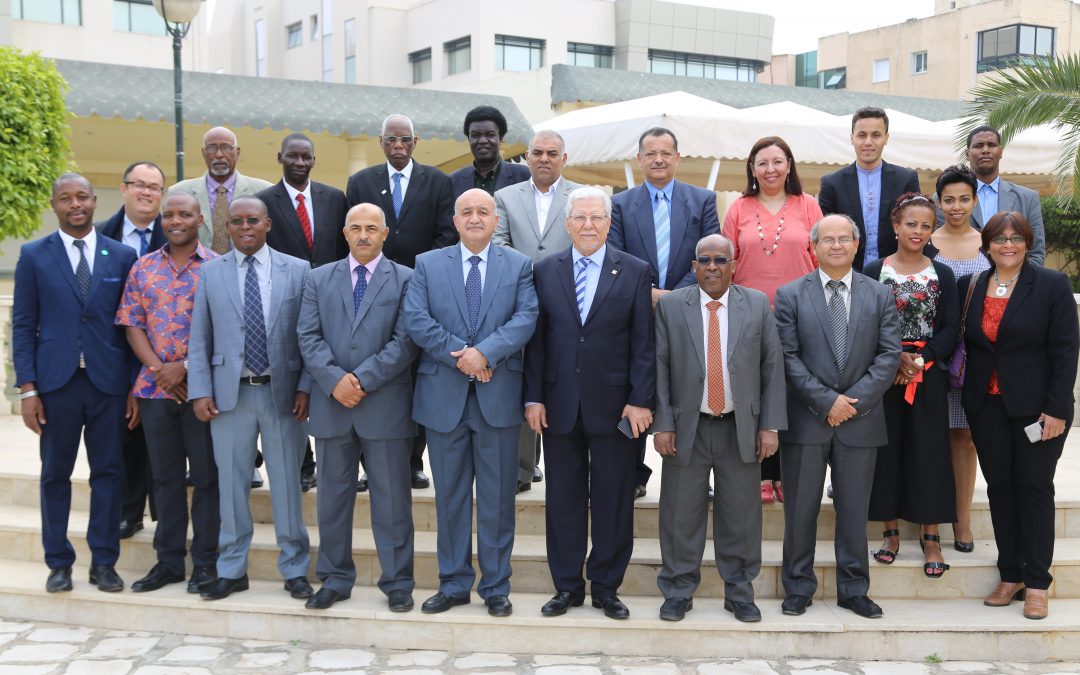
The African Union Commission is organizing a series of regional workshops in the continent to prepare and deliver the next phase of the Programme for Infrastructure Development in Africa (PIDA) Priority Action Plan (PAP) for 2020-2030.
The Arab and the Maghreb Union (AMU/UMA) and the Intergovernmental Authority on Development (IGAD) were the first of the eight Regional Economic Communities to kick-start a continental consultative process from 8 to 10 May in Tunis, Tunisia to work together on a 60-question face-to-face consultation in a bid to assess the progress achieved so far in PIDA and highlight the strengths and success stories as well as the weaknesses of the processes and instruments put in place for achieving the 2020 targets set in the PIDA-PAP.
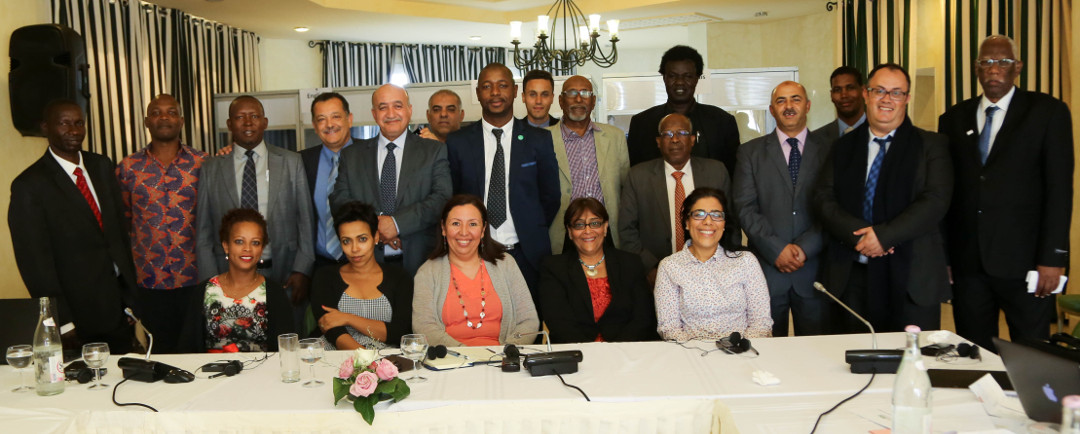
Delivering his opening remarks, the Secretary-General of the Arab Maghreb Union, Dr. Taieb Baccouche referred to the fundamental role of Regional Economic Organizations in the continent to ensure the success of economic integration, infrastructure development and coordination of development policies and programmes, namely PIDA.
“At the Maghreb level,” the Secretary-General stated, “member States of the Arab Maghreb Union had made enormous investments in infrastructure over the past few years.”
The Secretary-General concluded by urging all stakeholders to contribute effectively to this consultative process to play key roles and provide inputs towards the development of the second phase PIDA-PAP in order to ensure a common framework for the region to build the infrastructure necessary to create new jobs, increase intra-African trade and thus boost socio-economic development on the continent.
On his part, the Director for Economic Cooperation at the IGAD, Mr. Elsadig Abdalla stated the IGAD member states have invested heavily, estimated at US$ 7 billion, in infrastructure linking the capitals of the region, including railway lines, power lines and roads. He confirmed IGAD’s support and full involvement in the formulation of the next phase of PIDA.
Speaking on behalf of the African Union Commission, Mr. Yagouba Traoré, PIDA Data Analyst, explained that AU member States have been concentrating on ensuring the delivery of the short-term priorities and objectives of PIDA referred to as the PIDA Priority Action Plans (PIDA PAP), which comprises 51 programmes and projects.
“Due to strong political advocacy and sensitization work of the AUC and NEPAD, 34 programmes are now included in national development plans of 42 AU Member States,” Mr. Traoré noted. He explained that this reinforced political commitment is a key reason for the improvement in implementation of the first phase of PIDA-PAP. Mr. Traoré made reference to the key deliverables that include the PIDA Mid-Term Review and the development of the second Phase of the PIDA Priority Action Plan, which is imminent.
He went on to say that one crucial lesson learnt for the development process of the next phase of PIDA-PAP is to closely engage not only with the RECs, but also with AU Member States in order to ensure ownership of the strategic framework and the selected priority projects.
Mr. Traoré explained that, as the first in a series of consultations, the Tunis meeting was to “set the tone and pace”. “We look forward to the fruitful discussions with such a diverse list of participants, both in terms of geography and areas of expertise,” Mr. Traoré concluded.
Also speaking during the opening session on behalf of the NEPAD Agency, Mr. George Murumba, Monitoring and Evaluation Expert, stated that the meeting will yield project data that will update where the UMA and IGAD regions are with regards to PIDA, and lay the ground for the PIDA Mid-Term Review.
“But most importantly,” Mr. Murumba uttered, “the meeting will make necessary formative thoughts and recommendations on the process and selection criteria that will be integrated in the development of the next phase of the PIDA PAP 2020 and beyond on how to select national and regional priority projects that are aligned and can be sustained.”
He concluded by stating that this meeting marks the early steps of the process of developing the next phase of the PIDA PAP strategic framework. “Through the usual joint stewardship, we hope that we can use what we have learned to get the PIDA programme to be a success,” Mr. Murumba opined.
The overall objective of the workshop was to continue to engage the Regional Economic Communities in PIDA, to exchange national experiences at the regional level, and input was sought from workshop participants in a form of a questionnaire on the next phase of PIDA.
The Consultation is a three-day meeting full of reports, presentations, discussions on a questionnaire that brought together more than 30 representatives of the Arab and the Maghreb Union (AMU/UMA) and the Intergovernmental Authority on Development (IGAD), national stakeholders from Tunisia, Morocco, Mauritania, South Sudan, Uganda and Libya and experts from the African Union Commission and the NEPAD Agency.
The consultation in Tunis is expected to be followed by consultations in Nairobi, South Africa, Tanzania and Ghana ahead of a continental presentation on the results in October 2018.
Africa’s vision for transformation, Agenda 2063 calls for an integrated continent, politically united, based on the ideals of Pan Africanism and the vision of Africa’s renaissance. To achieve this goal, there is ardent need to step up infrastructure development on the continent.

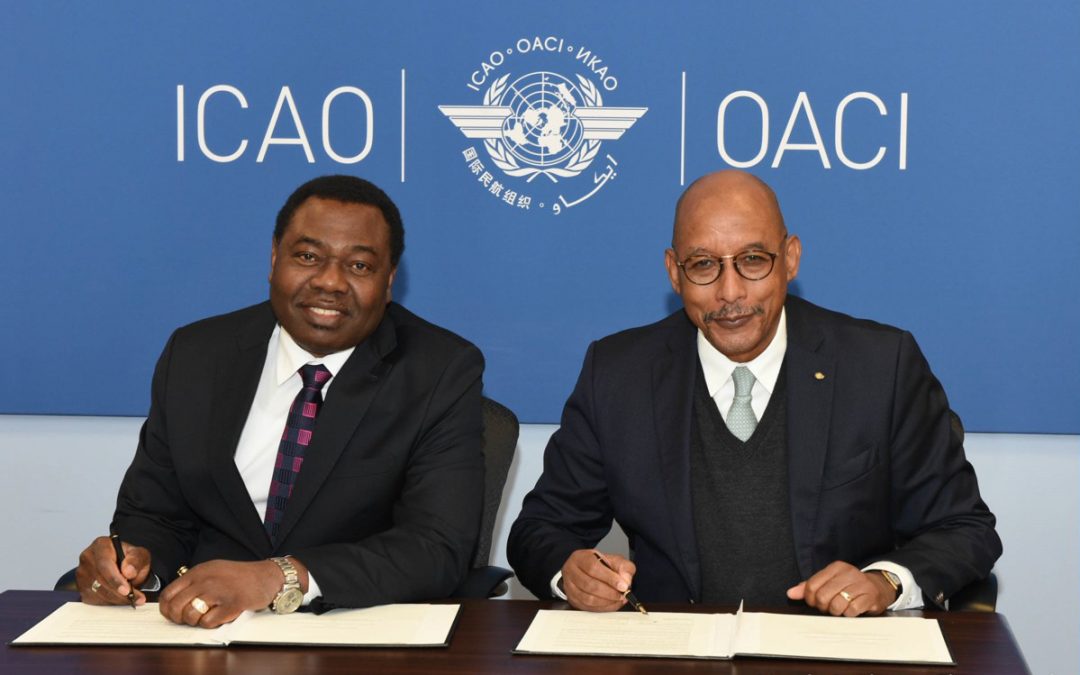
President of International Civil Aviation Organization (ICAO) Dr Olumuyiwa Benard Aliu with Dr Ibrahim Mayaki, CEO of the NEPAD Agency
The Single African Air Transport Market is the first African Union Agenda 2063 flagship project, which aims to create a single unified air transport market in Africa, to liberalise civil aviation on the continent and to advance Africa’s economic integration agenda. This will enhance the movement of people, goods and services, thus promoting trade facilitation.
To this end, Dr Ibrahim Mayaki, CEO of the NEPAD Agency, held a meeting with the President of International Civil Aviation Organization (ICAO), Dr Olumuyiwa Benard Aliu in Montréal, Canada, where a memorandum was understanding was signed on 8 May. This will see the two organisations work together towards aviation infrastructure development in Africa.
“Aviation projects will be part of the Programme for Infrastructure Development in Africa (PIDA) 2020-2030 action plan,” Dr Mayaki stated. He also called upon ICAO to play a prominent role in the selection of potential projects that can be prepared as PIDA projects in the requisite action plan.
NEPAD Agency and ICAO areas of collaboration will include the facilitation of funding and financing for aviation infrastructure development in Africa; implementation of NEPAD Agency’s MoveAfrica initiative for the aviation sector; development of aviation professionals with gender equity in Africa, and; e-commerce development in Africa.
The parties agreed that closer cooperation between the institutions can help mainstream the priorities of the aviation sector into the integrated transport system planning and development efforts in Africa, which will ultimately contribute to the overall sustainable development of air transport on the continent.
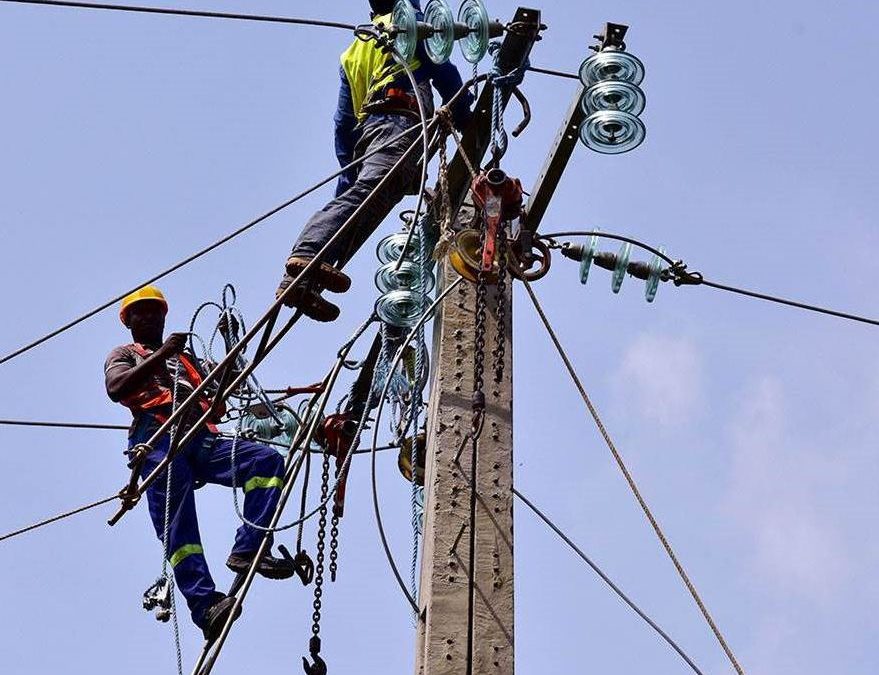
NEPAD Agency’s proposal for the establishment of a Continental Transmission Network was well received at the meeting held in Addis Ababa from 24 -27 April, by the 11 Africa Power Pools Forum and the Association of Africa Power Utilities. The Continental Transmission Network will link all the African utilities and create a huge energy market that will enable any utility to source energy from the most competitive sources within Africa or beyond.
“The Africa Power Pools Forum and the Association of Africa Power Utilities gave their support to NEPAD Agency to realise the visionary proposal that will lead to an integrated and prosperous Africa in its best form,” remarked Prof Mosad Elmissiry, Senior Energy Advisor to the NEPAD Agency’s CEO.
The meeting further undertook to work with NEPAD Agency and develop the terms of reference for a team to develop the masterplan for the Continental Transmission Network. Furthermore, both the power pools and utilities requested NEPAD Agency to expand the transmission network to become a continental power system network that includes both generation and transmission.
The NEPAD plan was welcomed as instrumental to the continental network for energy sufficiency in Africa. The plan is anchored first on the development and the realisation of each power pool masterplan, where all the utilities within each power pool are first connected and then all the regional networks linked using the most optimum links, thereby forming the continental transmission network.
The continental transmission network will be connected with Europe through the existing link between Morocco and Spain and the planed links between Egypt, Libya, Tunisia and Algeria with Italy. In addition, the continental transmission network will be connected with Asia via the existing link between Egypt and Jordon. It will be also connected to the Gulf States via the existing link between Egypt and Saudi Arabia, thus creating a huge intercontinental energy market where energy is not only traded within Africa but between Africa and Europe, Asia and the Gulf States.
In addition to presenting the continental transmission network, the NEPAD Regional Integration, Infrastructure and Trade programme team (represented by Prof Elmissiry, Tichakunda Simbini and Ephrem Getahun), also presented the useful information provided by the Virtual PIDA Information Centre and the data information systems developed at NEPAD Agency.

NEPAD Agency, represented by the Head of Regional Integration, Infrastructure and Trade Programme, Mr Symerre Grey-Johnson, undertook a working visit to COMESA to discuss preparatory arrangements for the Programme for Infrastructure Development in Africa (PIDA) Week 2018, as well as to provide training to COMESA staff on the Virtual PIDA Information Centre (VPiC).
During the working visit, Mr Grey-Johnson also paid a courtesy call to the Secretary General of COMESA, Mr Sindiso Ndema Ngwenya and delivered a special message from the NEPAD Agency CEO, Dr Ibrahim Mayaki.
In response to the special message from Dr Mayaki, the Secretary General commended the excellent work that the NEPAD Agency is doing as a technical agency of the African Union under the leadership of Dr Mayaki.
He added that COMESA is ready to host PIDA Week 2018 and that the regional economic community looks forward to showcasing PIDA projects situated within the region. The Secretary General will, after consultations with member states, provide information on the venue and dates for PIDA Week 2018.
Mr Grey-Johnson and Mr Jean Baptiste Mutabazi, on behalf of the two institutions thereafter signed an aide-mémoire, detailing the modalities of cooperation, specifically on:
- Knowledge exchange through the sharing of detailed project data;
- Joint implementation of the second phase of the PIDA Capacity Building project;
- Training and capacity development in the content management of the Virtual PIDA Information Centre
- Joint planning and collaboration in the build-up to PIDA Week 2018
With regards VPiC, Mr Mutabazi commended NEPAD Agency for the training provided to COMESA and indicated that COMESA will continue to use the tool to share crucial information on the progress of the PIDA projects.
COMESA has been instrumental in accelerating key PIDA projects within the region. These include the Zambia- Tanzania-Kenya transmission interconnector, the North- South Multimodal Transport Corridor and the Lilongwe – Lusaka Terrestrial Fibre Connection.
“We note and acknowledge the immense work that the COMESA region has put into the realisation and success of these projects. We commend you for that. This joint collaboration between NEPAD Agency and COMESA will indeed help strengthen the commitment from all our partners to accelerate PIDA project implementation,” said Mr Grey-Johnson.
On behalf of Dr Mayaki, Mr Grey-Johnson expressed gratitude to the Secretary General and COMESA for hosting the NEPAD team during the working visit and for accepting to host PIDA week 2018 in one of the member states, including providing the necessary support as required.