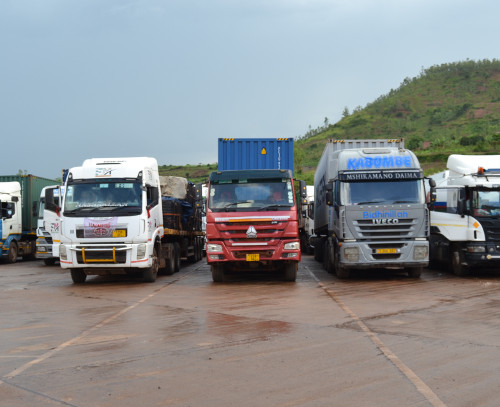
“The African Union Development Agency-NEPAD developed the Traffic Light System under the MoveAfrica banner in order to address some of the challenges faced along the transport and logistics corridors and Border Posts, such as excessive road checkpoints, bureaucratic procedures and inadequate road and logistics infrastructure ” said Snowden Mmadi, AUDA-NEPAD Infrastructure Expert.
Snowden was addressing delegates attending the workshop on the Sensitisation of the Traffic Light System (TLS) in the ECOWAS Region.
The TLS has so far been piloted in four selected border posts: 1. Beit bridge (border between South Africa and Zimbabwe; 2.Chirundu: border between Zambia and Zimbabwe; 3. Kazungula: border between Botswana and South Africa and Kasumbalesa: the border between Democratic Republic of Congo and Zambia. Performance of these pilot border posts are ranked and necessary corrective actions documented for replication to other border post. It is in this regard that AUDA-NEPAD has extended the TLS tool to two ECOWAS border posts the Seme-Krake- border between Nigeria and Benin the Noepe – border between Ghana and Togo- both border posts are along the Abidjan-Lagos Corridor.

The meeting brought together various experts from Transport Ministries, Immigration and Customs and Border officials from Benin, Ghana, Nigeria and Togo, ECOWAS Commission. Together with experts from the pilot countries in SADC.
Participants used the opportunity to share experiences on progress made in tracking trade facilitation instruments and instruments meant to enhance border operational efficiencies. The workshop also served as a platform for cross fertilization of processes between the Tripartite free Trade Area and ECOWAS. In the Tripartite Free Trade Area, AUDA-NEPAD is playing in working with the pilot countries to develop a harmonized process flow for Authorised Economic Operators as a corrective action.
“The objective of this meeting is to sensitize the focal persons assigned in ECOWAS and the four kick off countries along the Abidjan Lagos Corridor about the Traffic Light System. By virtue of brining the focal countries from the North South Corridor in SADC and COMESA, to be part of this process is clearly underpinning the softer side of Regional Integration as demonstrated through the work that AUDA-NEPAD is doing through MoveAfrica said Kisa Nkhoma, AUDA-NEPAD Officer responsible for MoveAfrica.
The team will finalise the first segment of the workshop and proceed with a visit to Noepe Border Post between Ghana and Togo and Seme – Krake Border Post between Nigeria and Benin over the next three days.

Editor’s Note:
Since the launch of MoveAfrica, AUDA-NEPAD has been focusing on the developing a tool called Traffic Light System (TLS) to rank and track the ability of the continent to move goods and services. The TLS monitors and evaluates performance of trade facilitation along the transport and trade corridors. It looks at the simplification, standardization and harmonization of border crossing procedures and transport regulations.
Dr Mohamed Shaker El Markab, Minster of Electricity and Renewable Energy in Egypt, highlighted various recent achievements made in both heavy energy infrastructure and renewable energy that have enabled Egypt to generate more than 25,000.00MW in four years (more than the total power generated by all African countries south of the Sahara, with the exception of South Africa). The country will also be completing, in four months’ time, the largest solar power station in the world.
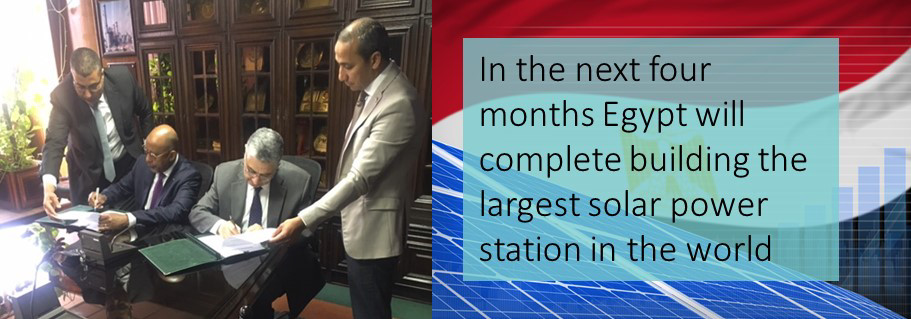
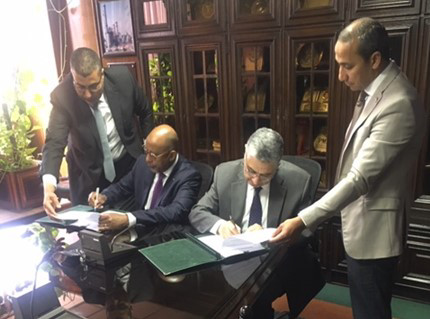
Dr Ibrahim Mayaki and Dr Mohamed Shaker El Markab, Minster of Electricity and Renewable Energy in Egypt signing minutes of the cooperation meeting on energy
The Minister was speaking during a meeting with the CEO of the African Union Development Agency-NEPAD, Dr Ibrahim Mayaki, who was accompanied by Senior Advisors at the Agency, Prof Mosad Elmissiry and Prof Tandeka Nkiwane in Cairo, Egypt, on May 8, to discuss potential areas of cooperation.
The meeting commenced with Dr Mayaki introducing AUDA-NEPAD and its new mandate as the Development Agency of the African Union, elucidating various areas of cooperation.
Dr Mohamed Shaker El Markab expressed interest in the Ministry of Electricity and Renewable Energy to assist, whenever possible, African countries in the development and implementation of not only energy infrastructure, but also renewable projects and to make available experiences and lessons learned.
The meeting ended with the signing of a document which lists areas of cooperation between AUDA-NEPAD and the Ministry of Electricity and Renewable Energy in Egypt, as follows:
- The development and implementation of a continental transmission network;
- The provision of clean energy to African countries with minimal access to electricity through the development and installation of micro /mini grid systems;
- Establishment of an AUDA-NEPAD Centre of Excellence in Renewable Energy in Cairo, with the prime objective of the provision of technical assistance and capacity development to African countries in the renewable energy project development and implementation;
- The development of the Cairo to Cape Integrated Corridor, with the transmission lines it requires to transfer power to meet the development of the integrated corridor.
Dr Mayaki further proposed that the President of the Arab Republic of Egypt, H.E Abdel Fattah el-Sisi should champion the AUDA-NEPAD flagship strategic programme on the development and implementation of the Continental Transmission Network. This will build upon the extensive experience of Egypt in the development and implementation of transmission networks, as well as building upon the strong commitment of Egypt to play its role in the further development of the African continent.
The Minister of Electricity and Renewable Energy agreed to cooperate with AUDA-NEPAD in the above-listed areas and provide the necessary technical support as required. It was further agreed that a joint working group will meet and conclude the details of the cooperation.
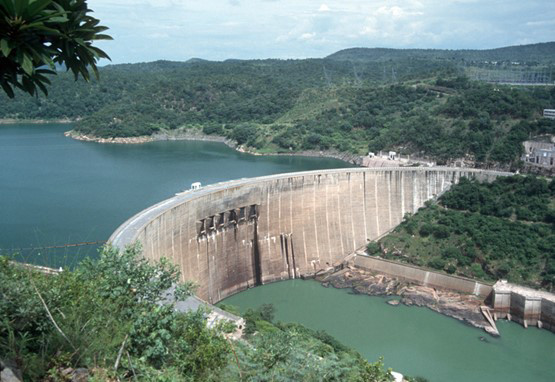
The African Union Development Agency (AUDA-NEPAD), in collaboration with COMESA, AMCOW, AfDB, Global Water Partnership Africa (GWP), and with support from GIZ, convened a PIDA Water Programme Stakeholders’ Workshop in Lusaka, Zambia from 24 to 26 April.
The purpose of the workshop was to give all Programme for Infrastructure Development in Africa Priority Action Plan (PIDA-PAP) transboundary Water and Energy projects promoters and coordinating entities an opportunity to present the status of their respective projects, and agree on recommendations on how the PIDA Water Programme support can be targeted to accelerate mplementation of the projects. The key stakeholders that contributed to the deliberations included Regional Economic Communities; River and Lake Basin Organisations, as well as funding and implementing partners. During the workshop, the project promoters also updated their individual projects information on the Virtual PIDA Information Centre.

L-R: Eng J B Mutabaazi, COMESA; Dr H Diop, AUDA-NEPAD; Mr A Simalabwi, GWP Africa Coordination Unit; Dr Kuiri F Tjipangandjara, GWPSA Board Chairperson
To strengthen the business case for investing in the projects, and thus contribute to accelerating projects financing, the PIDA Job Creation Toolkit was presented. Using the project information for the Batoka Hydropower scheme, a demonstration on how to use the kit was provided to the participants. In addition, a presentation was made on ensuring a Water, Energy and Food (WEF) Nexus approach to project preparation based on both the Nexus Screening Tool – championed by the SADC Community; and the SADC WEF Nexus Framework.
Speaking on behalf of Mr Symerre Grey–Johnson, Head of AUDA-NEPAD’s Regional Integration, Infrastructure and Trade Programme, Dr Hamady Diop underscored the need for fostering strong partnerships among stakeholders in tackling the challenges that affect the progress of implementation of water projects.
“By virtue of their transboundary nature, water projects require strong partnerships. For us to be able to deliver on the goals of PIDA Water, there is need to provide incentives for countries and regions of Africa to cooperate in addressing transboundary water-related issues,” said Dr. Diop. The sentiment was echoed by both Eng Jean Baptiste Mutabaazi, the Director for Infrastructure and Logistics at the Secretariat of the Common Market for Eastern and Southern Africa; and Mr Thomas Banda who represented the Executive Secretary of the African Ministers’ Council on Water.
In his opening remarks Dr Kuiri F Tjipangandjara, GWPSA Board Chairperson echoed the same sentiments on partnerships, adding that, as a partner in PIDA Water, GWP is committed to providing the necessary support in implementing the PIDA Water Programme in all its phases. “GWP will provide support to PIDA WATER within the framework of the Africa Water Investment Programme , which was endorsed by the African Ministers’ Council on Water this year.
GWP will work with all the parties in mobilizing the relevant partners, expertise and resources that are necessary for the implementation of the various projects under the PIDA Water Programme”, said Dr Tjipangandjara.
In 2012, the African Heads of States adopted the Programme for Infrastructure Development in Africa. PIDA is a programme of the African Union implemented by AUDA-NEPAD. The PIDA Priority Action Plan comprises 51 cross-border programmes covering four sectors transport, energy, trans-boundary water resources management and ICT.
In November 2017, the NEPAD Agency and the African Ministers Council on Water with support from the Government of Germany through GIZ – commissioned a review of the implementation of transboundary water projects under PIDA. According to the review water projects showed little progress compared to projects in other PIDA focus areas: ICT, Energy, and Transport. According to the evaluation, several factors contribute to the lack of progress. One of the key challenges is inadequate information on the priority water projects, including lack of information on the status and blockages associated with their implementation.
To address this gap, AUDA-NEPAD in collaboration with Global Water Partnership established ‘NEPAD PIDA Water Programme’ commencing from 2019 until 2024. The objective of PIDA Water Programme is to provide support in two areas:
- Assist in early stage preparation of selected projects;
- Facilitate the financing of these water projects.
The workshop builds on previous events convened by AUDA-NEPAD and its partners. The PIDA Water Programme was unveiled by the African Union Commission, AUDA-NEPAD, the African Development Bank, Africa Water Facility, AMCOW and GWP in August 2018, at a side event organised by AUDA-NEPAD and GWP during the Stockholm Water Week. In November 2018 AUDA-NEPAD and GWP signed a memorandum of understanding to accelerate the implementation of priority continental water infrastructure projects within the framework of the Programme for Infrastructure Development in Africa and the Africa Investment Programme.
Published by GWP
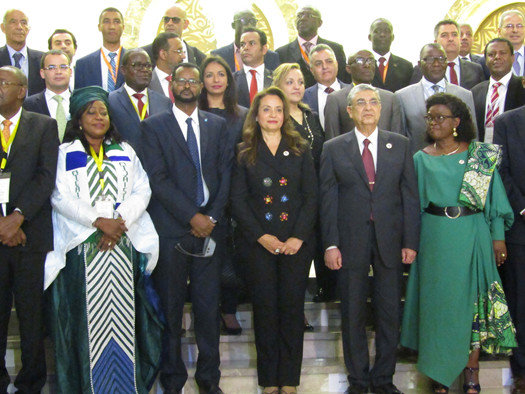
Ministers from 39 African countries have confirmed their commitment to consider strategies for developing smart infrastructure to boost Africa’s continental transformation and integration, by adopting the Egypt Declaration and Action Plans for the Transport, Energy and Tourism sectors.
The Declaration was adopted at the Second Ordinary Session of the African Union Specialized Technical Committee meeting on Transport, Transcontinental and Interregional Infrastructure, Energy and Tourism (STC-TTIIET), which kicked off 14 April in Cairo, Arab Republic of Egypt under the theme “Developing SMART Infrastructure to boost Africa’s Continental Transformation and Integration.”
Culminating a four-day meeting, the Declaration calls for Member States and Regional Economic Communities to strengthen inter-African and continental cooperation in the development of infrastructure. Given, the transformative nature of digital technologies, and the frequency and severity of climate-induced disaster on the continent, member States were requested to promote smart as well as climate resilient infrastructure.
Addressing the Ministerial Segment of the event, the Minister of Electricity and Renewable Energy of the Arab Republic of Egypt, H.E. Dr. Mohamed Shaker El Markabi said “I am honoured to have hosted this second meeting of the African Union Specialized Technical Committee meeting on Transport, Transcontinental and Interregional Infrastructure, Energy and Tourism (STC-TTIIET), which will support the integration of the continent.
The Minister highlighted Egypt Vision 2030, which is the roadmap that will shape the future to which the country’s citizens aspire.
To achieve Egypt Vision 2030, and all of the goals outlined by Vision 2030, the minister stressed “cooperation between countries, development partners and AUC is required in order to move forward.”
The declaration also urged the African Union Commission and the African Union Development Agency (AUDA-NEPAD) to fast-track the development of the second phase of the Programme for Infrastructure Development in Africa (PIDA PAP 2) integrating gender and youth dimensions, which should be submitted for adoption to AU organs by January 2021and to prioritise the launch of the African Network for Women in Infrastructure (ANWIn).
In her closing remarks, African Union Commissioner for Infrastructure and Energy, H.E. Dr. Amani Abou-Zeid, conveying her appreciation and gratitude to the President of the Arab Republic of Egypt and Chairperson of the African Union, H.E. Mr. Abdel Fattah Saeed Hussein Khalil El-Sisi for hosting the event, said it was clear from the declaration of the depth of the discussions that were held on key issues in the sectors of transport, infrastructure, energy and tourism.
“The adoption of the Declaration of Cairo shows the collective endorsement and consensus for infrastructure development as an impetus for the regional integration of the continent. Cooperation and partnerships among multiple countries with different core competencies are vital to boost continental transformation,” the Commissioner stated.
Member States were also requested to speed up ratification of pending legal instruments related to infrastructure, notably the Maritime Charter, Yamoussoukro Declaration, the Single African Air Transport Market, and Road Safety Charter.
Speaking earlier on behalf of the President of the African Development Bank, Dr. Akinwumi Adesina, the Director for Infrastructure and Urban Development, Mr. Amadou Oumarou underscored that the key priorities of the STC Agenda align with the Bank’s Strategic priorities – the High 5s, which prompted the financing of a number of projects within PIDA and beyond the framework fulfilling the objectives of this Specialized Technical Committee.
“I reaffirm the Bank’s commitment to work with all stakeholders in the preparation of the second phase of PIDA”, which Mr. Oumarou noted, “will require concerted efforts to come up with transformative priorities, that will have the desired impact on regional economic development, jobs creation, and opportunities for all”.
On her part, the Minister of Infrastructure and Transport the Togolese Republic and outgoing Chair of the STC, H.E Ms. Zouréhatou Tcha-Kondo épse Kassah-Traoré, gave an overview of the activities of the STC Bureau since the last session of the STC. She informed the meeting that the STC Sub-Committees had all met to review the implementation of the STC Plan of Action under the different sectors. She underscored the importance of the Programme for Infrastructure Development in Africa (PIDA) and called upon all Member States to support it as the programme plays a big role in the economic integration and development of the continent.
The meeting, organized by the African Union Commission jointly with the Government of the Arab Republic of Egypt, the African Development Bank (AfDB), the African Union Development Agency (AUDA-NEPAD) and the UN Economic Commission for Africa (ECA), drew over 400 participants from 39 AU Member States, Regional Economic Communities, the regional development banks and financial institutions, the continental specialized organizations, academia, private sector and civil society, and representatives from the development partners and international organizations involved in energy, transport and tourism.
The weeklong event, included an Experts’ meeting and a Ministerial session. It also featured a soft launch of the African Network for Women in Infrastructure (ANWIn), spearheaded by Commissioner Abou-Zeid.
The outcomes of the Second Ordinary Session of the STC-TIIIET will be submitted for adoption by the African Union Assembly of Heads of State and Government at its Ordinary Session in July 2019.
Note
The Specialized Technical Committee (STC), is the Ministerial decision-making organ of the African Union for the transport, energy, tourism sectors as well as overall infrastructure development matters. It was established with other similar sectorial organs initially as the Committee on Transport Energy and Communications under Article 25 of the African Economic Community Treaty (the Abuja Treaty) adopted by the Assembly of the Organisation of the African Unity (OAU) in 1994 and, subsequently, under Articles 14, 15, and 16 of the Constitutive Act of the African Union adopted by the AU Assembly in 2000. It was finally reconfigured into the STC on Transport, Transcontinental and Interregional Infrastructure, Energy and Tourism in February 2009 by the AU Assembly through its decision: Assembly/AU/Dec.227 (XII).
Replacement of the sector specific Ministerial conferences with STCs, is aimed at fostering multi-sector dialogues and, hence, formulation of comprehensive development strategies for the concerned sectors. STCs are expected to provide a platform for all stakeholders including the private sector and academia to share knowledge, experiences and solutions to common challenges in the development of the concerned sectors.In accordance with its Rules of Procedure, the STC meets biennially (once every two years). Institutional arrangement of the STC, its Sub-Committees and working groups enables all stakeholders to be adequately informed and involved in the implementation and reporting mechanisms of the STC Plans of Action.
The first meeting of the STC took place from 13 to 17 March 2017 in Lomé, Togo under the generous hosting of the Government of the Togolese Republic. The first session of the STC-TTIIET rallied around the theme: Financing Infrastructure in Africa.
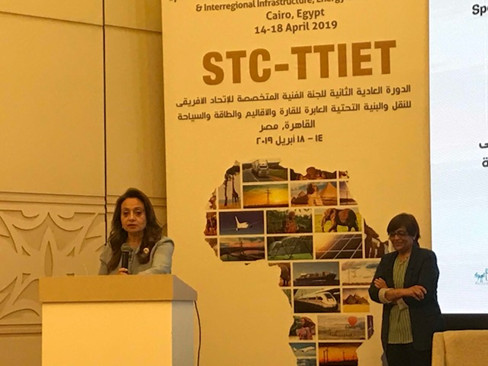
African Union Commissioner for Infrastructure and Energy, H.E. Dr. Amani Abou-Zeid today hosted a dialogue in Cairo to soft launch the African Network for Women in Infrastructure (ANWIn) – a new initiative aimed at promoting African women’s participation in infrastructure development at the national, regional, and global levels.
Held on the sidelines of the Second Ordinary Session of the African Union Specialized Technical Committee meeting on Investment in gender-responsive sustainable infrastructure is critical event, dubbed “Promoting inclusion and participation of women along the infrastructure Value Chains” facilitated an open debate to guide the establishment of ANWIn and enabled stakeholders initiate the process of scoping the vision and structure of the network.
At the event, Commissioner Abou-Zeid said “while this is a side event, integrating policy and planning that prioritizes women and hardwires gender is not a side agenda”.
“The second phase of the Programme for Infrastructure Development in Africa (PIDA) is currently being designed, which will provide a valuable opportunity to proactively integrate women’s participation at the country, RECs and partnerships level,” the Commissioner said. She urged all stakeholders to provide infrastructure services in a professional and gender-sensitive manner, which recognizes each resident including women as a valuable client.
“The goal of the ANWIn is therefore to provide a high level strategic engagement platform that will bring all stakeholders together for ensuring a gender responsive planning and implementation of infrastructure,” the Commissioner underscored.
She highlighted that a full programme of events will be held this year, with a formal launch of the Network planned for November 2019.
On her part, speaking on behalf of the President of Egypt’s National Council for Women (NCW), Dr Nagla Al Adly, Director of International Cooperation shared Egypt’s experience in women empowerment.
“Egypt has committed to increasing women’s participation in all sectors for an inclusive economic growth process. There are 10 female Ministers in key positions who are leaders and policy makers. Egypt is also addressing inclusive poverty reduction by promoting access to housing and ensuring that everyone has access to economic opportunities in all sectors,” Dr. Al Adly stated.
Also delivering the keynote address, the Minister of Tourism and Hospitality Industry of the Republic of Zimbabwe and Chair of the Sub-Committee on Tourism, H.E. Minister, Senator Prisca Mupfumira emphasized that the Convention of the Elimination of Discrimination Against Women (CEDAW) focused on the need to promoting women’s participation and ensuring that gender equality is central to all programmes.
She further called upon partners to establish a special fund at the AUC, which is dedicated to support gender responsive activities and will ensure that there is high level impact in support of empowering women in Africa
The opening session was followed by an-hour long panel discussion where panelists were invited to elaborate about the state of infrastructure gender imbalance in Africa and asked to help shape the future direction of the Network.
According to the panelists, the role of women and the gender dimensions in infrastructure remains marginal, despite the fact that Africa has made significant progress towards gender equality and protection of women’s rights at the policy level.
African Union Commission Director for Infrastructure and Energy, Mr. Cheikh Bedda noted that recognizing the significant gap in women’s participation in the African infrastructure development agenda, the designing of the second phase of the Programme for Infrastructure Development in Africa (PIDA) is expected to address pressing needs of women along the infrastructure value chains.
“Under the PIDA PAP 2 umbrella, the AUC and its partners will enhance gender responsiveness in the planning, design and implementation of infrastructure projects on the continent, through provision of appropriate gender sensitive project selection criteria and tools to undertake this activity,” Mr. Bedda stated.
On her part, African Union Commission Director for Women, Gender and Development, Ms. Mahawa Kaba Wheeler said, “we are convinced, the evidence is there and the connection between women and economic growth is extraordinarily powerful.”
She used the discussions to encourage all delegates attending the STC on Energy, Transport and Tourism to commit to action and deliver results for the improvement and enhancement of the lives of 600 million ordinary African women.
The Director of the GiZ AU Office, Dr. Inge Baumgarter emphasized the need to integrate the Network into existing PIDA initiatives and instruments.
“But, to achieve that, international partners must harmonize and align programmes and coordinate under the PIDA framework,” Dr. Baumgarter said.
The fourth panellist, Dr. Zeinab El-Bakri former Vice President of the African Development Bank reiterated that the second phase of PIDA also provides a strong platform for public private partnership and promoting sustainability through an inclusive approach in all PIDA and specifically corridor approach.
Comments from the floor also covered the positive opportunities that come when women are given wider access and equal opportunity in the development of infrastructure.
The side event discussions were underpinned by key coalesce around the transformational role of women in infrastructure development to unlock long term game-changing impact in the continent.
The discussions were moderated by Dr. Sunita Pitamber, Former Director of Human Capital Development Department at the African Development Bank.
With over 200 participants in attendance, the event served as a soft launch for the African Women in Infrastructure Network (AWIN). The initiative was developed by the African Union Commission and the African Union Development Agency (AUDA-NEPAD) with the support of the Government of Germany, through GiZ. The Network should provide a platform for strategic advocacy, capacity building and networking aimed at enhancing the implementation of PIDA.