The Regional Integration Infrastructure and Trade Programme (RIITP) is working to advance e-commerce and trade in Africa by working on initiatives that promote confidence and trust in Africa’s cyberspace. Specifically, RIITP is pushing for enabling regulatory and policy environments in the context of the African Union Convention on Cybersecurity and Personal Data Protection. (more…)
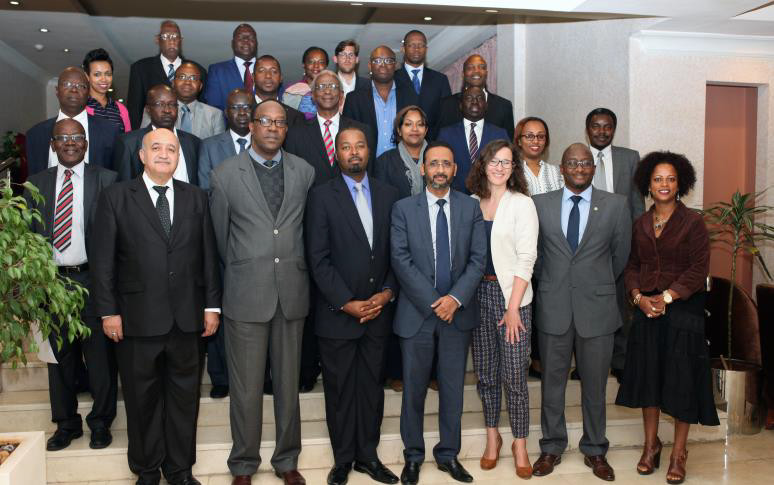
The Programme for Infrastructure Development in Africa (PIDA) Steering Committee today concluded its two-day deliberations on the current status, the challenges and ways to improve the implementation of the continental programme, which will come under strong review at the PIDA Week, slated to be held from 10 to 14 December in Swakopmund, Namibia.
In his opening remarks, the Director for Infrastructure and Energy at the African Union Commission highlighted some of PIDA’s achievements since its inception in 2012.
The Director also expressed his gratitude to the Government of Namibia for accepting to co-host the 2017 PIDA Week in Swakopmund, Namibia under the auspices of the Southern African Development Community (SADC).
“The continent has high expectations from the Third Edition of PIDA Week and I call on all stakeholders not to let it down, said Mr. Bedda, summing up a tone of urgency in the choice of invitees and the best conditions for the promotion of the projects that will be showcased during the event.
The Director further informed delegates that the PIDA projects would be showcased during the upcoming AU-EU Summit, planned for November 2017 in Cote D’Ivoire.
“PIDA will be featured as an agenda item during the Business Forum of the AU-EU Summit and hence it is up to us to seize this unique opportunity to better promote our projects,” Director Bedda concluded.
On his part, Mr. Symerre Grey-Johnson, Head of Regional Integration Infrastructure and Trade at the NEPAD Agency opined that that the meeting is the adequate forum to generate strategic solutions to the challenges that will be jointly identified, particularly regarding the realisation of the PIDA Priority Action as we are approaching 2020.
“We continue to think out of the box to seek innovative mechanism for infrastructure financing in Africa. The NPCA just launched the 5% Agenda which aims to mobilize domestic funds for infrastructure by rising Pension and sovereign wealth fund up to 5% of their investment,” Mr. Grey-Johnson told the meeting.
Mr. Grey-Johnson concluded by calling on all delegates on the need to embark on a consultative process to get input on the design of the PIDA PAP Phase Two as the end of the current phase is imminent.
Representing the African Development Bank, Mr. Mtchera Chirwa commended the partnership between the AUC, NEPAD Agency and AfDB under PIDA, which has achieved results in developing Africa’s infrastructure. He also reiterated the Bank’s continued prioritization for preparation and financing of PIDA projects within its pipelines. He called on the Steering Committee to start planning for the preparation of the next PIDA Priority Action Plan (PAP) to take effect upon conclusion of the current PAP in 2020.
The meeting had fruitful discussions around the preparation of PIDA Week particularly on how to fast-track the finalization of the concept note and agenda of the meeting and this was also tied in with the PIDA Week Communication Strategy presentation to which members requested to take a fresh approach focusing on beneficiaries of PIDA projects. The meeting also took note of the funding gap for PIDA Week, which should be urgently addressed.
The Steering Committee heard presentations on the status of the implementation of PIDA PAP, the preparation of the PIDA Progress Report 2017, PIDA Monitoring and Data Collection system, the Virtual PIDA Information Centre and the status of the various initiatives that facilitate PIDA implementation including the Service Delivery Mechanism (SDM), the Continental Business Network, the NEPAD Infrastructure Project Preparation Facility (IPPF) and Africa 50. Organizations’ engagements during the upcoming AU-EU Summit were also discussed.
The meeting also heard reports from the Community of Sahel-Saharan States (CEN-SAD), the East African Community (EAC), the Economic Community of West African States (ECOWAS), the Southern African Development Community (SADC) and the Union of Arab Magreb (UMA) on the implementation of the PIDA Priority Action Plan (PAP) projects within their regions.
The PIDA Steering Committee is the highest technical body tasked with fostering overall coordination of implementation efforts by various stakeholders and to provide general policy guidance and facilitation for smooth implementation PIDA.
The two-day meeting was jointly organized by the African Union Commission (AUC) and the NEPAD Planning and Coordinating Agency (NPCA), was co-chaired by the African Development Bank (AfDB) and supported by GIZ. About 30 delegates representing the AUC, the NEPAD Agency, the AfDB, ECA, the European Union, GIZ, five Regional Economic Communities were in attendance.
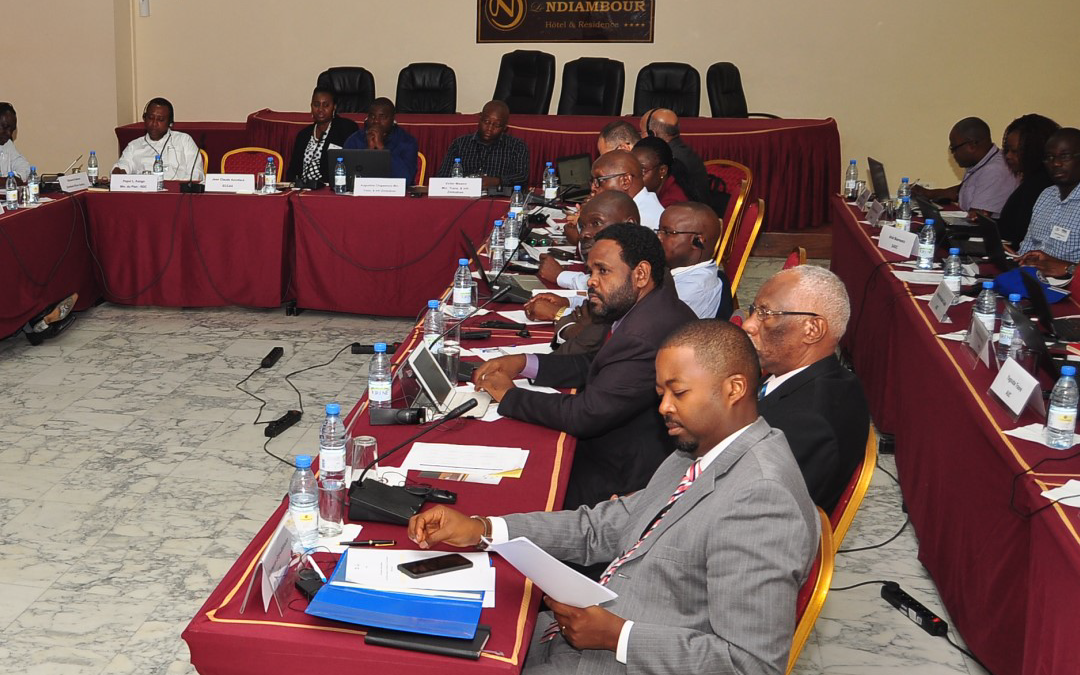
Mr Symerre Grey-Johnson, Head of Regional Integration, Infrastructure and Trade, officially opened the first round of NEPAD-Programme for Infrastructure Development in Africa (PIDA) training on Public Private Partnerships (PPP), co-funded by the African Union Commission and GIZ in Dakar Senegal, from 26 – 30 September. (more…)

The first meeting of the steering committee and experts of the Continental High Speed Rail Network project opened on Monday 25 September in Dakar, with the aim of sharing the experiences of member countries while waiting for the feasibility study. (more…)
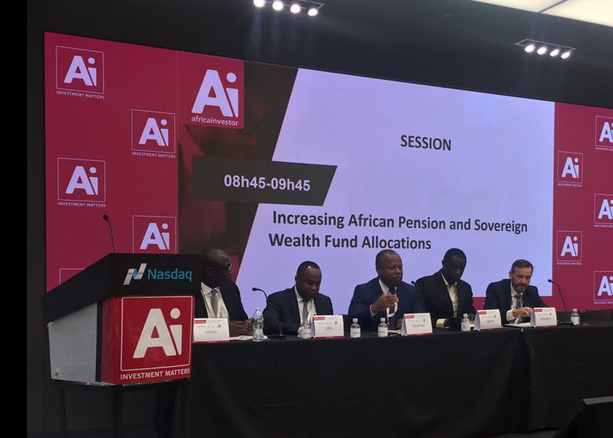
The NEPAD Agency gathered international investors and CEO-level business leaders at the New York Stock Exchange for the launch of its 5% Agenda campaign. The launch took place five years after a January 2012 African Union Summit adopted the Programme for Infrastructure Development in Africa (PIDA) which sets out 51 cross-border infrastructure programmes and more than 400 actionable projects in four sectors.
According to the World Bank, the continent needs to spend $93 billion annually (44% for energy; 23% for water and sanitation; 20% for transport; 10% for ICTs; and 3% for irrigation) until 2020 to bridge its infrastructure gap, which is currently removing an estimated 2% of GDP growth every year. On the other hand, Africa only managed to close 158 project finance deals with debt totalling $59 billion over the decade 2004-2013, which represents only 5 percent of infrastructure investment needs and 12 percent of the actual financial flows. The 5% Agenda campaign highlights that only a collaborative public-private approach can efficiently tackle these issues and calls for allocations of institutional investors to African infrastructure to be increased to the declared 5% mark.
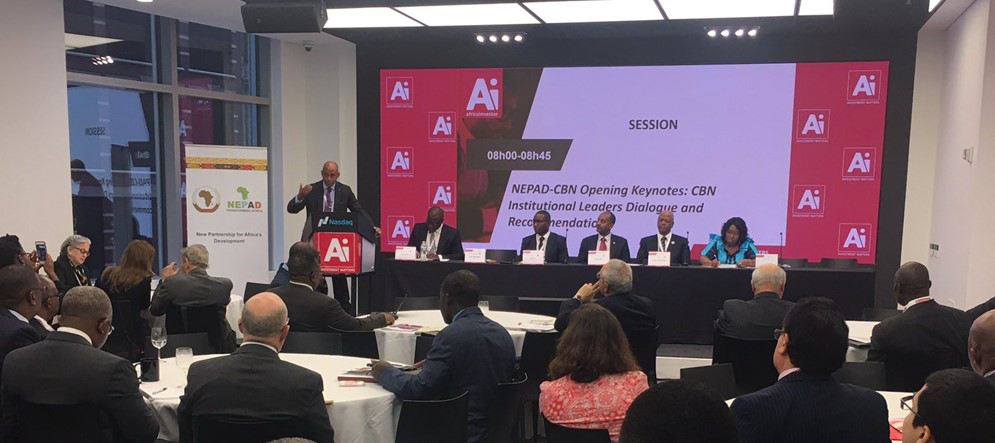
Dr Ibrahim Assane Mayaki, NEPAD Agency CEO, speaking at the launch of the meeting
Speaking at the launch, Dr Ibrahim Assane Mayaki, NEPAD Agency’s CEO stated that “Infrastructure plays a leading role in supporting growth on the continent. At the same time, it can represent an innovative and attractive asset class for institutional investors with long-term liabilities. By launching the 5% campaign in New York today, we invite investors to take advantage of the wide-ranging opportunities Africa has to offer and to move forward with what can only be a win-win partnership.”
The launch of the campaign gathered high-level international investors and business leaders, including members of the PIDA Continental Business Network (CBN) which is spearheaded by NEPAD and constitutes a CEO-level private sector infrastructure leaders dialogue platform on PIDA.
Tony Elumelu, one of Africa’s most prominent entrepreneurs and active participant in the CBN said, “Africa is getting stronger every day with new business opportunities and innovative ideas but what is still crucially missing is project implementation. A coherent and coordinated approach is needed to mobilise institutional investors while limiting their risk exposure. African governments need to work on creating conducive environments to attract these investments which are so vital for the continent’s growth and development.”
According to a 2016 McKinsey report, institutional investors and banks have $120 trillion in assets that could partially support infrastructure projects.
Now more than ever, Africa needs to tap into this available. As banks face additional regulatory challenges and as governments have limited fiscal space, it is becoming increasingly urgent to unlock additional flows from long-term institutional investors such as insurers, pension funds, and sovereign wealth funds.
For pension and sovereign wealth funds to be able to invest in large-scale infrastructure projects in Africa, a variety of issues need to be addressed to strategically and intentionally facilitate long-term allocations. Chief amongst these matters is the need to reform national and regional regulatory frameworks that guide institutional investment in Africa. Likewise, new capital market products need to be developed that can effectively de-risk credit and hence, allow these African asset owners to allocate finance to African infrastructure as an investable asset class to their portfolio.
All these issues are at the heart of the 5% Agenda roadmap, which is the backbone of NEPAD’s campaign and is foreseen to have the following impact:
- Unlocking notable and measurable pools of needed capital to implement regional and domestic infrastructure projects on the continent.
- Broadening and deepening the currently very shallow African capital markets, whilst at the same time contributing significantly to regional integration and job creation.
- Promoting the development of innovative capital market products that are specific to the continent’s challenges and potential in regards to infrastructure development.
- Raising the investment interest of other institutional and non-institutional financiers that so far have been hesitant to include African infrastructure projects as an asset to their investment portfolio based on specific, concrete next steps and project suggestions.
For further information on NEPAD and the “5% Campaign” see: http://www.nepad.org/resource/concept-note-nepad-5-agenda-mobilizing-domestic-pensionand-sovereign-wealth-fund-capital