On October 16 2018, the authorities of the Democratic Republic of Congo announced the signing of an Inga 3 project exclusive development agreement with two consortia (Chinese and Spanish). This is a milestone for Africa. After eight years of studies and discussions, this hydroelectric dam project on the Congo River will finally enter its operational phase.
Inga 3 is a project designed to lead to an extra production of 11,000 megawatts (MW) of clean renewable, permanently available energy that will benefit the entire power grid in the region. The benefits of this project will be felt as far as in South Africa. The China Inga 3, a consortium including Chinese and European companies, plans to invest $14 billion. If all goes well, Inga 3 will be the largest hydroelectric project ever built on the continent. It will also showcase opportunities offered by public partnerships for infrastructure development in Africa, as well as regional integration.
Infrastructure deficit is one of the most serious problems our continent faces. It is most obvious in the energy sector – although 145 million people on the African continent have been able to connect to electricity since the beginning of the millennium, 645 million Africans are still deprived of it. How can we expect to start a virtuous circle of industrialization if the most basic prerequisite – access to affordable energy – is not fulfilled?
We estimate that the annual investment threshold for Africa’s infrastructure deficit is $120 billion. As of now, annual investment stands at about fifty billion only. The continent now devotes a little more than 4% of its GDP to infrastructure equipment. This is better than ten years ago when it dropped to 2%. But it is still less than in China, where this proportion is up to 14%. There are also major differences between countries and the structure of their economies, depending on their exposure to commodity prices in particular.
This lack of infrastructure carries big costs. When economies are isolated, they become less attractive, since unified markets on a regional scale are difficult to create. Inadequate infrastructure increases production costs, weighs on business’s competitiveness and negatively impacts foreign direct investment. Still, Africa must create 450 million jobs over the next twenty years to absorb its population growth. World Bank studies have shown that infrastructure deficit costs the continent two points of annual growth and generates a 40% shortfall in competitiveness gains for its enterprises.
Having stated the fact, we need to think about solutions. Be it in energy or communication corridors, the regional dimension is essential and must receive the greatest attention. Infrastructure covering several countries in the same region is more attractive to investors (both public and private) because it allows the pooling of costs and promotes integration. In 2012, the African Union set up an African Infrastructure Development Program (PIDA) managed jointly by the NEPAD Agency and the African Development Bank (AfDB). Its roadmap focuses on structuring cross-border projects, numbering 51, for a total package of $360 billion. They are the pivot of the continent’s real economic takeoff.
The approach chosen by PIDA is highly original in that it anchors the projects exclusively on Public Private Partnerships (PPP). Indeed, the real question is not whether to invest more, but rather, who should invest more? Again we say, ‘Africa must first rely on its own means and resources to carry out its development.’ But is this true in the infrastructure domain? The answer is ‘yes,’ but with some reservations. Investment in infrastructure is an absolute necessity, but it must not be to the detriment of other equally important programs such as investment in education, health or agriculture. Therefore, association with the private sector on the one hand, and international cooperation on the other hand, are credible alternatives to state funding. This is the solution that, as the NEPAD Agency, we never stop recommending, and this is the solution DRC authorities have chosen to adopt with the Inga 3 project.
Author: Dr Ibrahim Mayaki, CEO, NEPAD Planning and Coordination Agency

The African Union Commission and the NEPAD Planning and Coordinating Agency today convened partners in Addis Ababa, Ethiopia to rally support for the next phase of the Programme for Infrastructure Development in Africa (PIDA), which is currently under formulation.
In his remarks, the Director for Infrastructure and Energy at the African Union Commission, Mr. Cheikh Bedda stated that the Coordination Meeting is happening at a strategic time in the life of PIDA.
“The implementation of the first phase, running from 2012 to 2020, has almost reached its end, engagement is well underway in the implementation of PIDA, and negotiations are ongoing for the next phase of PIDA-PAP. By bringing together all these partners, the coordination meeting provides a unique opportunity to promote collaboration and coordination on the second phase of PIDA-PAP (2020-2030),” the Director explained.
Mr. Bedda concluded his remarks by thanking GiZ and the European Union for their continued support to the first phase of PIDA and their pledges in the formulation and eventual implementation of the second phase of PIDA PAP.
On his part, Mr. Symerre Grey-Johnson, Head of Regional Integration Infrastructure and Trade at the NEPAD Planning and Coordinating Agency stated “this gathering is laying the groundwork for a new era of collaboration of working together that will propel us towards our common goal for PIDA.”
Mr. Grey-Johnson gave an overall presentation on PIDA and an outlook on the formulation of the next phase with an invitation to all partners in attendance to involve by listing the opportunities for further engagement on PIDA and with the objective of optimal alignment and coordination between partners.
The event gathered representatives from GiZ, European Union, Chinese Mission to the African Union and the Embassies of the Republic of Indonesia and Korea, representing the Group MIKTA, which is an informal partnership between Mexico, Indonesia, South Korea, Turkey and Australia.
A number of key themes emerged in the main discussion, covering a wide range of issues including: strengthened involvement of the private sector in infrastructure, formulation of project selection criteria, pre-screening of projects against these criteria, support to the expert pool under the Service Delivery Mechanism (SDM) for early-stage project preparation and support to the optimization of the Continental Business Network (CBN) for an increased private sector engagement.
Partners lauded the AUC and the NEPAD Agency for organizing such an event early in the process of the preparation of the next phase of PIDA and they agreed that going forward there should be an effort to reduce overlaps and duplication of efforts from partners to ensure increased efficiency.
It was also agreed that AUC and NEPAD will organize bilateral meetings with each partner in the coming two months to iron out the work plan and find common areas of cooperation.
This first time gathering of these key partners to PIDA was jointly organized by the African Union Commission (AUC) and the NEPAD Planning and Coordinating Agency (NPCA). About 20 delegates were in attendance.
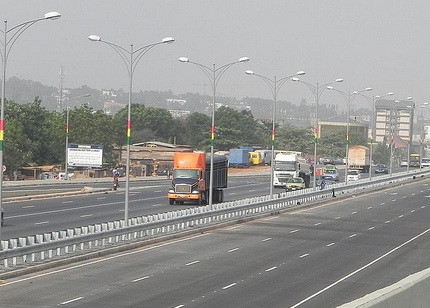
The next phase of GiZ support to the Programme for Infrastructure Development in Africa (PIDA) Priority Action Plan (PAP) 2 with an envelope of Euro 7 million for the next three years was at the heart of discussions of the two-day meeting held in Addis Ababa, Ethiopia on 12 and 13 November 2018.
In his remarks, the Director for Infrastructure and Energy at the African Union Commission, Mr. Cheikh Bedda stated that this meeting is happening at a strategic time in the life of PIDA as the implementation of the first phase, running from 2012 to 2020, has almost reached its end.
“It is therefore necessary and important for AUC, NEPAD, GiZ and all involved that their activities and programmes should be harmonised and coordinated so that we can all put our financial and human resources to achieve our common goal for PIDA. This calls for stronger partnerships and collaborations among regional, continental and international institutions as well as active engagement with our member States,” Mr. Bedda asserted.
On his part, Mr. Symerre Grey-Johnson, Head of Regional Integration Infrastructure and Trade at the NEPAD Planning and Coordinating Agency appealed for tangible results from PIDA that can impact the lives of Africans while emphasizing the essential importance of strengthened collaboration from PIDA’s implementing partners.
GIZ started its new PIDA-support phase in August 2018 with four output areas covering EURO 7 million. The objective of the meeting was to garner joint understanding of objectives and content on next GIZ-PIDA support phase; clarify on modes of cooperation, communication, monitoring progress and develop a joint workplan for GIZ Support to PIDA Phase 2018-2021.
The two-day meeting was jointly organized by the African Union Commission (AUC), the NEPAD Planning and Coordinating Agency (NPCA) and GIZ. About 30 delegates representing the three institutions were in attendance.
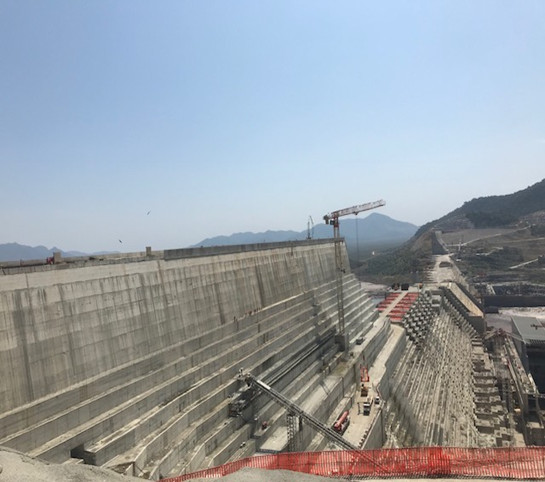
The African Union Commission took journalists from across the continent on a tour of the largest hydropower project in Africa, the Grand Ethiopian Renaissance Dam (GERD) today.
The GERD, which is one of the projects under the Programme for Infrastructure Development in Africa (PIDA), is at an advanced stage with an installed capacity of 6,000 MW. Construction of the Dam started in April 2011 and is currently employing 12,000 jobs.
The visit to the Dam was preceded by a third media workshop held on 5 and 6 November 2018 in Addis Ababa, Ethiopia to hone the skills of 24 journalists to effectively cover the Programme for Infrastructure Development in Africa (PIDA).
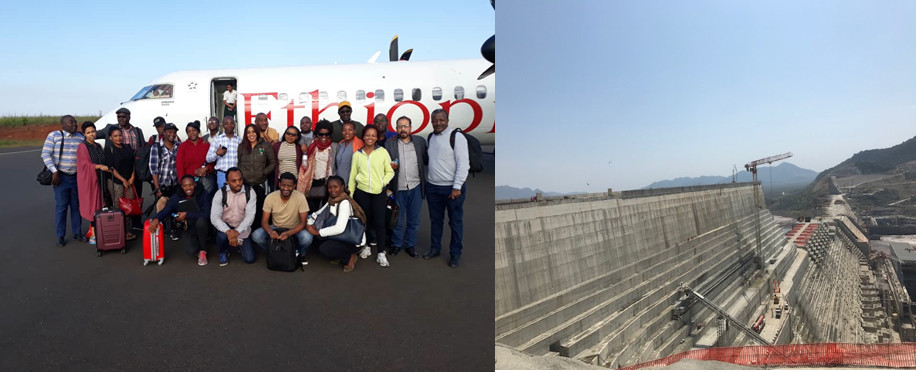
PIDA Journalists Network visiting the Grand Ethiopian Renaissance Dam
“During the two days, the overall assessment of journalists was that all were ready and willing to give off their best in writing / reporting about PIDA Projects,” said Mr. Yagouba Traoré, Head of Information Unit in the Department of Infrastructure and Energy of the African Union Commission.
Mr. Traoré affirmed that from the questions asked, it was clear that many write about PIDA but struggled to adapt to new media, get content (data in particular) and leveraging on social media.
The workshop brought together 24 media practitioners from across Africa. The journalists were exposed to the workings of PIDA, how to analyze the impact of its work, and where to find the right data and information for news and features stories.
The low internet penetration levels were mentioned as one of the growth inhibitors as many said it is, at times, out of reach or not reliable especially while on PIDA site visits. The interest by journalists to participate in PIDA also showed that many had the quest for knowledge in personal improvement, particularly in infrastructure. This interest, honed can be a great asset for stakeholders to not only add on media exposure but also boost content for PIDA’s Virtual site (https://www.au-pida.org) which is a resource tool kit for a great international audience.
It was concluded that the PIDA Journalists’ network has the potential to be elevated to be one of Africa’s media database of professionals who can be equipped with knowledge and skills on business reporting in Africa. The interest drawn from this training is a testament that there is great potential in this with the help of PIDA stakeholders.
The event is part of the PIDA Capacity Building Project (CAP) supported by the African Development Bank and whose main objective is to strengthen the capacity of the African Union Commission, the NEPAD Agency and the Regional Economic Communities (RECs) for planning, facilitation and coordination of implementation of regional infrastructure programmes and projects necessary for enhancing Africa’s physical and economic integration and socio economic development.
The Programme for Infrastructure Development in Africa (PIDA) is an African Union Commission (AUC) initiative, in partnership with the NEPAD Planning and Coordinating Agency (NPCA) the African Development Bank and the United Nations Economic Commission for Africa. There are 51 programmes and projects divided into 433 projects covering various sectors including transport, energy, information and communication technology (ICT) and trans-boundary water sectors.
Bridging the gap in infrastructure is vital to economic advancement and sustainable development. However, this can only be achieved through regional and continental co-operation and solution-finding, which calls for greater political will and buy-in.

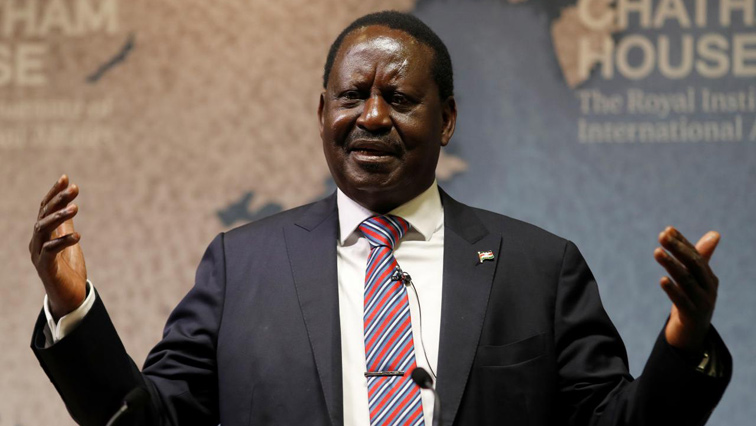
The Chairperson of the African Union Commission, Moussa Faki Mahamat, appointed Honourable Raila Odinga of Kenya as High Representative for Infrastructure Development in Africa on 20 October 2018. This decision is part of the African Union’s drive to expedite the integration of the continent through infrastructure, in order to promote economic growth and sustainable development. It comes against the backdrop of renewed efforts in this regard, as exemplified by the adoption, last March in Kigali, of the Agreement on the African Continental Free Trade Area (AfCFTA) and the Protocol on Free Movement of Persons and the African Passport, as well as by the launching of the Single African Air Transport Market (SAATM), in Addis Ababa in January 2018. The Chairperson of the Commission expressed appreciation to President Uhuru Kenyatta for his support to this decision, consistent with his commitment to African integration.
As High Representative for Infrastructure, Hon. Odinga will work to support and strengthen the efforts of the Commission’s relevant Departments and those of the NEPAD Agency, within the framework of the Programme for Infrastructure Development in Africa (PIDA), which was endorsed by the Assembly of the Union in January 2012. In this respect, his mandate includes mobilising further political support and development assistance from Member States and Regional Economic Communities, as well as facilitating greater ownership by all concerned stakeholders on the continent. He will also support the NEPAD Agency initiatives to encourage increased commitment from development partners.
In the discharge of his mandate, and building on the work and leadership of the PIDA Presidential Infrastructure Champion Initiative, the High Representative will pay particular attention to the missing links along the transnational highway corridors identified as part of the Trans-African Highways Network, with a view to facilitating their development and modernisation. He will also focus on the continental high-speed train, which is one of the flagship projects of the First Ten-Year Implementation Plan of Agenda 2063, in the context of the relevant African Union decisions. He will also interact with the current Champions of related African Union and NEPAD Agency initiatives and seek their guidance, to ensure the required synergy and coherence. The Presidential Infrastructure Champion Initiative was born out of a proposal by the NEPAD Agency and the South African Department of International Relations and Cooperation. It was initially championed by South Africa’s former President Jacob Zuma to accelerate regional infrastructure development enabled through the political championing of projects.
Dr Ibrahim Mayaki pointed out that the role of the champions is to bring visibility, unblock bottlenecks, co-ordinate resource mobilisation and ensure project implementation. It presents the opportunity for African Heads of State and Government to be actively involved in the development and implementation of projects. The projects cover four infrastructure sectors that is, transport, energy, ICT and transboundary water projects. “We warmly welcome Hon. Raila Odinga and look forward to support him in achieving sound results,” Dr Mayaki said. The official communique can be viewed at: http://www.peaceau.org/uploads/auc.com.appointment-of-high-representative-20.10.2018.pdf