Africa’s population is projected to reach 1.6 billion by 2030, which translates into a need to produce at least 50% more food; and at least a tenfold increase in water needs for energy production to support socio-economic development. These challenges and the resultant increase in water demand are further aggravated by rapid urbanization and industrialisation. This requires huge investments in water to satisfy the social and economic demands among other things.
Currently, the level of financing for water and sanitation activities on the continent falls far below the level required to meet the targets of the Africa Water Vision 2025; the Africa Union (AU) agenda 2063; and the Sustainable Development Goals (SDG’s). To accelerate implementation and focus attention on the water projects, the NEPAD Agency, in collaboration with the Global Water Partnership (GWP), has formulated the PIDA Water Project as part of ongoing activities to prepare the second phase of the Priority Action Plan of the Programme for Infrastructure Development in Africa (PIDA-PAP II) from 2019-2024.
The project was unveiled on 29 August 2018, during the Stockholm World Water Week, at a side event on “Accelerating project preparation and financing of transboundary water and hydropower projects in Africa: Learning from Africa and scaling up”. The event convened by the AU, NEPAD Agency, the African Ministers’ Council on Water (AMCOW), the African Development Bank Group (AfDB), the African Water Facility (AWF) and the Global Water Partnership (GWP) culminated in the signing of a communique which expressed the partners’ commitment to work together and mobilise other partners to accelerate project preparation and water investment in Africa.
Building up on the outcomes of side event in Stockholm, GWP and the NEPAD Agency are convening a technical session on the project during the upcoming PIDA Week to be held in Victoria Falls, Zimbabwe. The session will be held at 11:00 hours on Monday 26 November 2018 in Kalala Room, Elephant Hills Resort hotel. The aim is to discuss strategic pathways to accelerating the preparation and financing of the PIDA transboundary water projects, as well as mainstreaming water, energy, food and ecosystems (WEFE) nexus perspectives into the implementation of the hydropower projects.
PIDA Water comprises a portfolio of transboundary water and hydropower projects sponsored and implemented by Member States of the African Union. The Regional Economic Communities (RECS); the African Ministers’ Council on Water; and River Basin Organisations (RBOS) will provide support towards implementation, which will be coordinated by the NEPAD Agency with GWP as the Executing Agency. The programme targets to leverage $10 Billion in investments by 2025. The programme was established following a review on the implementation of the transboundary water projects under PIDA. The review, commissioned by AMCOW, concluded that the transboundary water projects had made limited progress in comparison to projects in other PIDA focus areas.
Speaking on the PIDA Water Programme, Mr. Symerre Grey-Johnson, Head – Regional Integration, Infrastructure Trade and Partnerships at the NEPAD Planning and Coordination Agency emphasised a key objective of the programme as promoting innovation, stronger project transaction advisory support services linked to PIDA-PAP II, as well as capitalising on the available PIDA delivery instruments to move the advance the water projects from conception to implementation.

“The goal of PIDA Water Programme is to accelerate the preparation and financing of transboundary water projects and foster a water-food-energy nexus approach in the development of hydropower projects. The implementation of the programme will facilitate project preparation and investment into nine prioritised PIDA PAP Water Projects, three water aquifer projects, one River Basin Management Project, five Multipurpose reservoir projects and the 10 PIDA hydro Energy Projects. By accelerating Water infrastructure, PIDA is expected to meet the needs of water-dependent growth sectors and addressing the needs to the poor. The programme is also expected to see the mainstreaming of water security, sustainable sanitation and climate resilience in development” said Mr. Grey-Johnson.
He also added that the programme will pave way for the development of SDG 6 ‘Investments Cases’ on water and sanitation developed and support job creation, gender empowerment and industrialisation, whilst allowing for the preparation of bankable projects water-energy-food-ecosystems nexus.
With regards to NEPAD’s partnership with GWP on PIDA Water, Mr. Alex Simalabwi, GWPSA Executive Secretary and Head of Africa Coordination Unit, highlighted that GWP support to PIDA Water will be provided within the framework of the Africa Water Investment Program (AIP) through the component on Project preparation and Finance for water, energy, food and ecosystems nexus of the AIP.

“The AIP was developed by GWP in collaboration with AfDB, Africa Water Facility (AWF), AU and AMCOW. The AIP is an outcome of the joint UN and World Bank High-Level Panel on Water (HLPW) established by the President of the World Bank and UN Secretary-General in 2016. Its main goal is to transform and improve the investment outlook for water security and sustainable sanitation for a prosperous peaceful and equitable society. This goal will be achieved by enhancing job creation through gender-sensitive investments in water security climate-resilient development and industrialisation,” added Mr. Simalabwi.
The NEPAD Agency will work with GWP to mobilize partners across the continent, accelerate project preparation and catalyse-e investments for job creation. The AIP support Programme to PIDA Water will contribute to African Union Agenda 2063, the Heads of State and African Union AU Sharm el-Sheikh Declaration on water and sanitation; the N’Gor Declaration on Water Security, Sanitation and Hygiene; and the Africa Water investment Programme objectives.
The special session on PIDA Water will give participants a platform to share investment opportunities in transboundary water and hydropower projects, discuss bottlenecks and solutions to resolving these bottlenecks in order to accelerate implementation of the PIDA Water Projects. Furthermore, participants will have the opportunity to showcase selected PIDA Water and PIDA Hydropower project. Updates on the development of PIDA Water within the framework of the Africa Water Investment Programme(AIP) will also be shared during the session, whilst stakeholders give their inputs and reflections.
Author: Leticia Ngorima
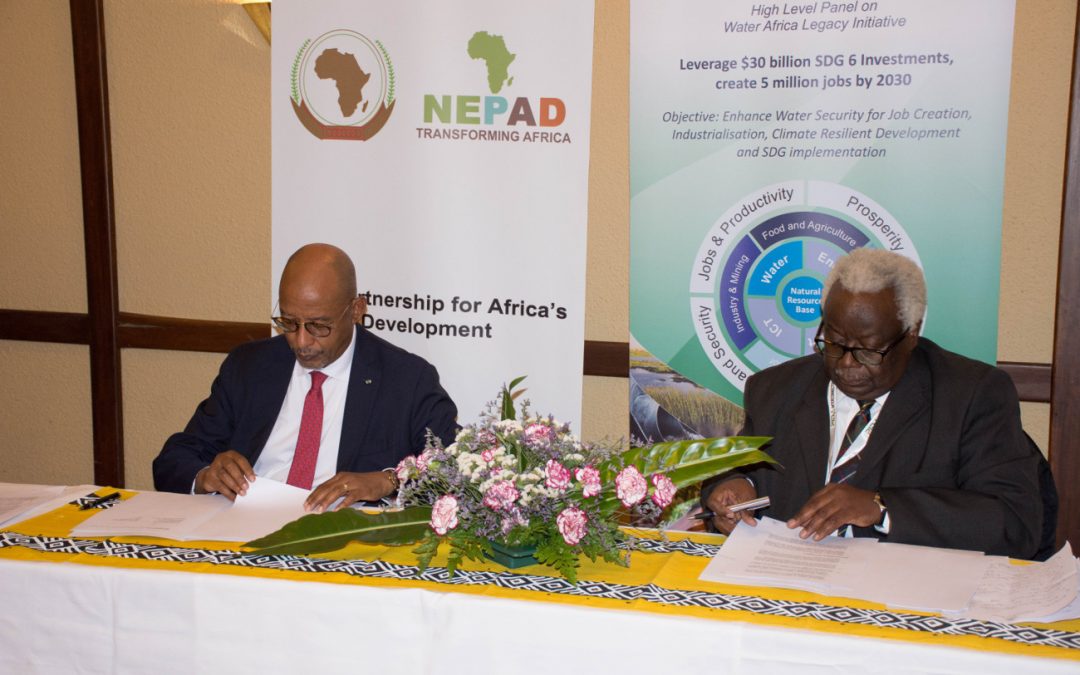

The NEPAD Agency and Global Water Partnership (GWP) have today signed an MoU to accelerate the implementation of priority continental water infrastructure projects within the framework of the Programme for Infrastructure Development in Africa (PIDA) and the Africa Investment Programme (AIP).
The MoU was signed on the margins of PIDA Week, an annual event organized by the African union, NEPAD Agency and the AfDB, jointly with other strategic partners. The event brings together, on an annual basis, various stakeholders involved in Africa’s Infrastructure Development.

“The collaboration will contribute to Africa’s transboundary water investments, development, and the NEPAD Agency mandate in particular through the implementation of the PIDA water transboundary projects. Transboundary Water project owners must engage our two institutions and facilitate the successful implementation of this MOU through their full engagement in the delivery of the regional integrated agenda tasked on us all by the Africa Union and our member states” said the NEPAD Agency CEO, Dr. Ibrahim Mayaki during the signing ceremony.
According to AfDB[1] , by 2030, the African population will reach 1.6 billion. To meet the needs of the continent, Africa will need to produce at least 50% more food; and at least a tenfold increase in water needs for energy production to support modernisation of economies and social progress. Rapid urbanisation and industrialisation will increase water demand, increase environmental degradation and pollution of water bodies. Urgent measures and leadership is required to address impacts of climate change on water availability, to scale up water investments, protect and better manage Africa’s freshwater resources and avert the growing risks and uncertainties to economic productivity and political stability.
“Through the Africa Water Investment Programme (AIP), GWP will mobilise its partners and foster innovative partnerships between the public and private sector to accelerate project preparation of water investments, ensure that these processes are sustainable through good water governance building on the foundation of integrated water resources management. Our joint partnership with NEPAD Agency will support analytical studies and interventions to accelerate preparation of bankable transboundary PIDA water projects that will stimulate job creation, industrialization and achievement of SDGs”, said Dr. Kuiri F Tjipangandjara, Chair of GWPSA and African Coordination unit.
The partnership between the two agencies will support project preparation, transaction management, resource mobilization, advocacy, capacity development, research and knowledge sharing in the joint implementation of transboundary water projects through a nexus approach.
Media Contacts:
Millicent Kgeledi, NEPAD Agency Communications: millicents@nepad.org
Leticia Ngorima, GWPSA Communications: leticia.ngorima@gwpsaf.org


The New Partnership for Africa’s Development (NEPAD) Agency, a technical agency of the African Union and the International Labour Organisation (ILO) a specialized agency of the United Nations, have entered into a Memorandum of Understanding (MoU) with the objective of promoting decent jobs for all the economic sectors for people of Africa.
The MoU was signed on the margins of Programme for Infrastructure Development in Africa (PIDA) Week, an annual event organized by the African Union Commission, NEPAD Agency and the African Development Bank, which brings together infrastructure stakeholders working on infrastructure projects under the continental framework of the PIDA.
Speaking during the signing ceremony Dr. Ibrahim Assane Mayaki, CEO of the NEPAD Agency welcomed the MoU as an important step that would serve to bring together the collective convening power of the two institutions to ensure that Africa’s citizens are afforded opportunities for decent work.
“The partnership between the ILO and the NEPAD Agency responds to both Agenda 2063 and the SDGs including the aspect of strengthening the means of implementation through global partnerships aimed at sustainable development. We have embarked on several initiatives to address the challenges of providing decent work and employment and we welcome the partnership with ILO which will help to strengthen our efforts. We look forward to a fruitful partnership and to implementing joint initiatives that will contribute to regional integration, continental and global aspirations” ,he said.
Dr Joni Musabayana, ILO Director for the Decent Work Team in Pretoria described this MoU as “a major step for the ILO to better mainstream the Decent Work Agenda in Africa through the infrastructure project that can be used proactively to go beyond the reduction of infrastructure gaps and also support employment creation and social protection for local populations, with a specific focus on the most vulnerable ones”.
Through their collaboration, ILO and the NEPAD Agency will focus on the development, application or customization of relevant tools, capacity building and research towards knowledge products and research targeting several areas of mutual interest with a gender sensitive approach, including, but not limited to infrastructure, agriculture, innovation, youth entrepreneurship and skills development, occupational safety and health, green jobs and employment intensive approaches for the benefit of people of Africa. Special targeted programmes for the most vulnerable groups such as people living with HIV and AIDS and people with disabilities, among others, will be deployed.
Media Contacts:
NEPAD: Millicent Kgeledi |NEPAD Communications Unit| Millicents@nepad.org
ILO: Ms. Maria Mutandwa, Communications Officer mutandwa@ilo.org; Tel.: +263772129210-3

The Programme for Infrastructure Development in Africa (PIDA) Week 2018 opened in Victoria Falls, Zimbabwe on Monday with a united call from panelists for the media to project Africa’s image positively during a media breakfast that brought together PIDA network of journalists, local and global media fraternity, infrastructure policymakers, development partners and private sector to discuss among other issues, Africa’s infrastructure deficit and how that can be reduced to ensure inclusive development on the continent.
The African Union Commissioner for Infrastructure and Energy, Dr. Amani Abou-Zeid, said that Africa is making a lot of progress in terms of infrastructure development. She implored the media to highlight the continent’s success stories in that regards.
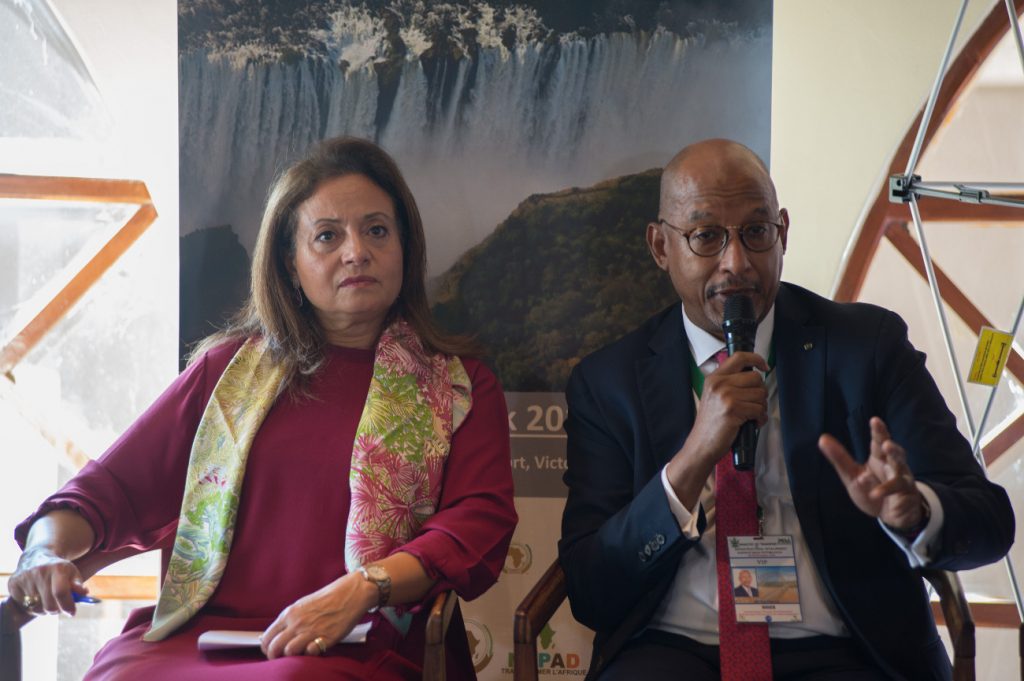
“African leaders are fully committed to the development of transboundary infrastructure projects on the continent which will make a huge difference in terms of regional integration, job creation and related issues so let us talk about the positive things that are happening on our continent so we can continue to build on that as we push for inclusive growth in Africa,” Dr. Abou-Zeid said.
Echoing the same sentiments on the role of the media in advocating PIDA success stories, the NEPAD Agency CEO, Dr Ibrahim Mayaki urged the media to advocate on transboundary infrastructure projects such as Kazungula Bridge on the border of Zimbabwe, Zambia and Botswana, to remind Africa and the world that Africa is indeed rising.
He indicated that the role of PIDA in contributing to the success of the African Continental Free Trade Area (AfCTA) cannot be over-stated and necessitates an integrated approach to infrastructure development on the continent.
To date, 49 member States have signed the AfCFTA since it was unveiled at an African Union Summit in Kigali, Rwanda, in March. Twelve have now ratified the agreement, which needs 22 ratifications by March next year to go into force.
“These countries together could create a huge market with a combined population of more than one billion people and a combined gross domestic product of more than US $3.4 trillion and the role of PIDA in contributing to the success of the AfCTA cannot be over-stated,” said Dr Mayaki.
“As regional integration arrangements deepen and intra-African trade increases, we need to focus on improved trans-continental highways in terms of road and rail networks. Deepening of financial markets and increased cross-border financial flows, including money transfer will require us to make additional investments in ICT and digitalisation while growing industrialization and agro-industries will require more reliable and affordable power supply across the energy mix.” he said.
The Media Breakfast session also brought together other key PIDA stakeholders, namely the African Development Bank (AfDB), GiZ and the Development Bank of Southern Africa (DBSA).
GIZ African Union Office Director, Ms. Inge Baumgarten said Africa has so much untapped potential that can be harnessed through massive infrastructure development.
“If the Asian tigers could make it then the African Lions can also take a giant leap forward and do it as well. It is not impossible,” said Ms. Baumgarten, adding much has been achieved in infrastructure development through GIZ partnership with the African Union and its partners on the continent.
Development Bank of Southern African (DBSA) Group Executive, Mohan Vivekanandan said “as a development finance institution (DFI) the DBSA works closely with other DFIs across the continent to achieve national and regional infrastructure priorities in Africa. The DBSA is currently preparing a number of PIDA linked projects in both the energy and transport sectors.” in line with this year’s theme Realising Africa’s integration through Smart Infrastructure and Good Governance.
Mr. Hubert Danso, the Chief Executive Officer and Chairman of Africa Investor (Ai), said Africa is leading the way in terms of mobilizing financing, including from pension funds, to be able to invest in infrastructure development on the continent.
He praised the Economic Commission for Africa (ECA) for the work is doing under PIDA as a partner to the African Union Commission, Nepad and the African Development Bank in pushing the continent to close the infrastructure gap in Africa.
“The ECA has very specific and specialized expertise and is helping a lot in underpinning the institutional framework of all this. We are the mobilizers of the capital while the African Union provides the political capital that’s essential to be able to give the comfort that the policies and the frameworks will be adhered to during the life style of the projects,” said Mr. Danso.
Ms. Moono Mupotola, the Infrastructure Director at the African Development Bank said the bank will continue to support transboundary infrastructure development on the continent.
The Media Breakfast is a platform that seeks to raise the profile of infrastructure development in the African media landscape, increase the volume and quality of positive news on the role and impact of PIDA in infrastructure development on the continent.
The 2018 PIDA Week is being held under the theme; PIDA Implementation through Good Governance – Realizing Smart Infrastructure for Africa’s Integration.
The Media Breakfast, which gathered more than 100 targeted participants, was co-organized by the African Union Commission (AUC), NEPAD Agency, AfDB and the ECA.
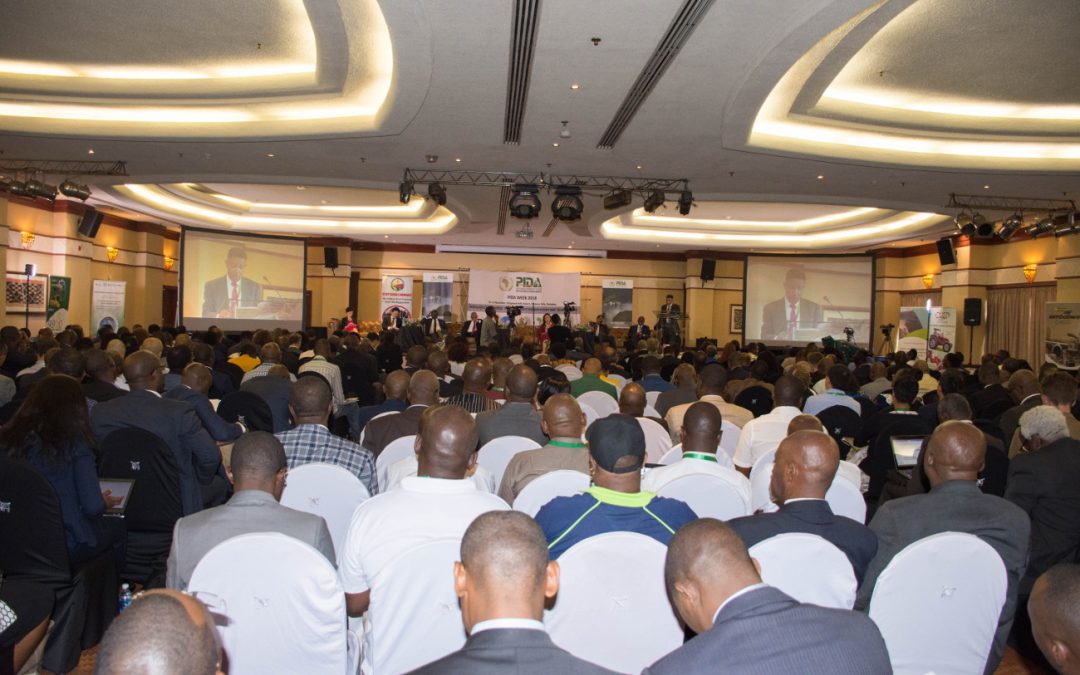
Africa needs to unite and work hard to reverse colonial infrastructure systems which promoted the extraction of profitable agricultural and mineral wealth for export at the expense of local communities and the continent,” Zimbabwe’s Transport and Infrastructural Development and Transport Minister, Joel Biggie Matiza said Monday.
Speaking during the opening session of the 2018 PIDA Week in Victoria Falls, Mr. Matiza said for Africa to fully develop and integrate, there was need for the continent to focus on infrastructure development, in particular transboundary projects, to ensure it was competitive enough to make a difference.

“Historically African countries inherited underdeveloped infrastructure geared towards exports-imports transportation rather than focusing on transforming and improving local production capacity as well as promoting intra-Africa trade. This is reason for us to reverse this legacy and as a continent we have crafted a new trajectory through PIDA, a turning point we should follow to ensure we transform the current state of affairs,” he said.
Mr. Matiza hailed PIDA for its efforts in trying to bridge Africa’s infrastructure deficit. He said PIDA Week offered a valuable opportunity for policymakers, project developers, private sector, civil society, and academia to exchange views and proffer solutions towards the implementation of regional infrastructure projects on the continent.
“PIDA is such a vital initiative, not only to catalyse intra-African trade but perhaps more important to provide a wider platform to encourage investment” he said.
For his part, the Chief Executive Officer of the NEPAD Agency, Dr Ibrahim Assane Mayaki , said Africa needs to accelerate the development of transboundary infrastructure projects if it is to fully integrate. He said a lot of progress has been made since African leaders adopted PIDA in 2012.
“We recognise that optimal solutions for continental problems lie in Regional Integration. We are getting there progressively, but we need to accelerate implementation if we want regional integration. It’s not a question of lack of financial resources, it is a question of lack of bankable projects and sound rules. So we need to do our homework,” said Dr Mayaki, adding that local, national and regional governance was key to the success Africa seeks in closing its infrastructure deficit.
The African Union Commissioner for Infrastructure and Energy, Dr. Amani Abou-Zeid said the current low levels of infrastructure on the continent posed one of the biggest challenges to Africa’s industrialization and development agenda, which is having a negative impact on Africa’s competitiveness and participation in the global markets.
According to the World Bank, the poor state of infrastructure in Sub-Saharan Africa in respect of its electricity, water, roads and ICT, reduces national economic growth by 2 percent annually and reduces productivity by as much as 40 percent.
“Meeting Africa’s infrastructure needs and developing cost-effective infrastructure services requires significant investments,” the Commissioner said, adding the continent should turn its challenges in infrastructure development into an opportunity.
The financing gap in Africa for infrastructure development is estimated at between US$130 -170 billion per year.
“Despite encouraging investments on infrastructure, both at the domestic and international levels, which averages about US$75 billion per year, there is a need for significant increase in infrastructure investments on the continent,” Dr. Abou-Zeid added.
She added: “There have been remarkable achievements within a short period of time considering the many barriers that exist within the continent. However, the scale of the challenge in infrastructure development on the continent calls for more accelerated implementation and innovative approaches to meet-up with the increasing demand for infrastructure services.”
For his part African Union’s High Representative for Infrastructure Development, Honorable Raila Amollo Odinga, said Africa needs to move away from the conference and feasibility study syndrome and move to implement agreed projects if it is to successfully integrate and achieve sustainable development and change the lives of its citizens for the better.
“Transformational decisions have to be taken if we are to move ahead. Africa must deal with political bottlenecks that hamper its development or we shall never compete,” said Mr. Odinga. “We must also overcome the habitual of feasibility study after feasibility study without implementing. We must change.”
Ms. Carla Montesi, European Commission’s Director for Planet and Prosperity and a representative of COMESA Secretary General, Ms. Chileshe Kapwepwe, also spoke in the opening session in support of Africa’s desire to invest in infrastructural development that will support Africa’s growth.
Ms. Montesi said the EU will continue to support Africa in its quest for an integrated infrastructure that generates jobs for the youth; helps reduce poverty; and supports regional integration.
Mr. Xiao Weiming, Director-General of the Belt and Road Unit, National Development and Reform Commission, the People’s Republic of China, said his country will continue to work with African nations to help build their infrastructure capacity.
He said China will continue to enhance cooperation with Africa through infrastructure development, adding PIDA was a transformative initiative that will change the face of Africa if fully and successfully implemented.
The 4th PIDA Week is being held under the theme; Realizing Africa’s Integration through Smart Infrastructure and Good Governance, and it intends to build on the relative achievements and the momentum created in the previous three events to continue to engage stakeholders on the effective delivery of infrastructure on the continent.
The event welcomed more than 400 participants brought together an impressive line-up of top-level government representatives, influential industry leaders, private sector, leading thinkers from international institutions, government, academia, business and finance.
It aims to provide a platform for stakeholders to engage in accelerating and synergizing their efforts to accelerate projects preparation and implementation; mobilize adequate financial and technical resources for projects; increase private sector participation in PIDA implementation; and mobilize Member States to integrate the PIDA projects into their national development plans.