With all its potential, the continent of Africa is challenged by inadequate and under-developed infrastructure. This limits intra-regional trade by driving up import and export costs.
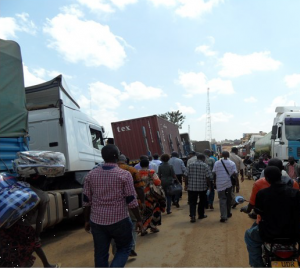
Congestion at border posts that Move Africa’s Traffic Light System aims to alleviate
The unavailability of adequate capacities and technology, coupled with much slower than anticipated private sector participation, has also hindered infrastructural development. This in turn slows down the movement of goods by road, rail, air and sea. However, logistical bottlenecks do not only affect trade, but also have an impact on the humanitarian sector.
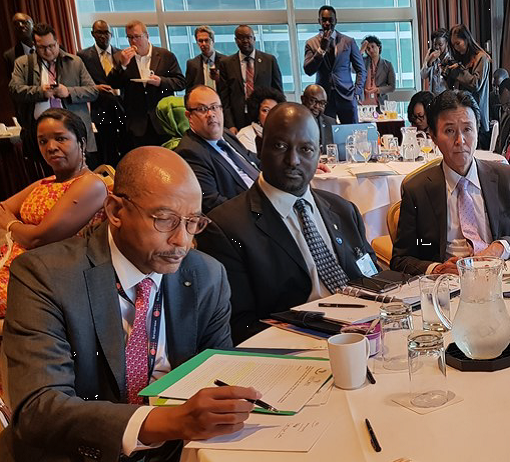
It is against this backdrop that the NEPAD Agency convened a high level dialogue in New York during Africa Week, on the role of the development community and private sector investment for easy movement of humanitarian goods.
Strengthening collaboration between the public and private sectors in all aspects related to the movement of goods and people, including the development of policy frameworks and the structuring of public-private partnerships is a way to overcome these challenges.
At the event, which was attended by over fifty delegates from the public, private and development sectors, the Deputy Chairperson of the African Union Commission, H.E Thomas Kwesi Quartey, reminded participants that, “It is important to look back at the challenges of integration on the African continent in order to move forward towards the Africa We Want. Infrastructure, good governance, transparency and rule of law are the development pillars needed in this sector.”
Dr Ibrahim Mayaki, CEO of the NEPAD Agency stated that, “Combining the synergies that exist between the development and private sectors in easing the movement of humanitarian goods, will help to address the underlying factors in the bottlenecks faced.”
“The Traffic Light System in the Move Africa initiative, as well as its implementation tools look at improving transport corridors for economic activities and movement of humanitarian goods, which are critical to attaining goals in Agenda 2063 and Agenda 2030,” Mr David Mehdi Hamam, Acting Special Adviser on Africa remarked.
In the NEPAD Agency’s MoveAfrica Initiative, the organisation has partnered with Japan International Cooperation Agency (JICA) to reduce processing inefficiencies and delays at borders through One-Stop Border Posts, which will be monitored in its Traffic Light System.
Piloting of the Traffic Light System will be along four selected border posts in Southern Africa – Beitbridge, Kazungula, Kasumbalesa and Chirundu.
Following the high level dialogue, alignment of the functions and activities of the humanitarian sector in the Traffic Light System will take place in the emergency and humanitarian response sector. The system received input in the following areas: Transit Guarantee schemes; Centre Attractiveness, and; Risk Management.
Mr Symerre Grey-Johnson, Head of NEPAD’s Regional Integration, Infrastructure and Trade Programme reiterated that land borders present some of the biggest bottlenecks with regards movement of humanitarian goods. He therefore made the call for stronger public-private partnerships and business models that embed corporate social responsibility in logistics to find solutions to ease these hurdles. He also reiterated that MoveAfrica’s traffic light system will be redressing some of the border challenges across Africa.
The high level meeting looked at the parameters that serve the humanitarian sector in facilitating the smooth flow of humanitarian aid and tailor made solutions to that effect.
The meeting also discussed models such as the vision of Uganda in the logistics space, in view of the Uganda Model of Refugee Management, enabling the NEPAD Agency to make necessary interventions as the development agency of the African Union.
The design of the Traffic Light System will be completed by the end of November 2017. Therefore the piloting of the system will factor in outcomes of this meeting on the selected border posts. The piloting is scheduled to commence in January 2018.
Speakers at the event also included Prof Baccahouche, Secretary General of Arab-Maghreb Union; Mr Sandagdorj Erdenebileg, Chief, Policy Development, Coordination, Monitoring and Reporting Service, Least Developed Countries, Landlocked Developing Countries and Small Island Developing States; Ambassador Adonia Ayebare, Permanent Representative of Uganda to the UN; Mr Grant Leaity, Deputy Director, Office of Emergency Programmes at UNICEF; Mr Chris Nikoi from the World Food Programme; Mr Jeffrey Nemeh from Ford Motor Corporation; Dr Barbara Samuels from the Global Clearinghouse for Development Finance, and Ms Catherine Asapokhai-Utsalo representing charity organisations.

The Regional Integration Infrastructure and Trade Programme (RIITP) is working to advance e-commerce and trade in Africa by working on initiatives that promote confidence and trust in Africa’s cyberspace. Specifically, RIITP is pushing for enabling regulatory and policy environments in the context of the African Union Convention on Cybersecurity and Personal Data Protection. (more…)
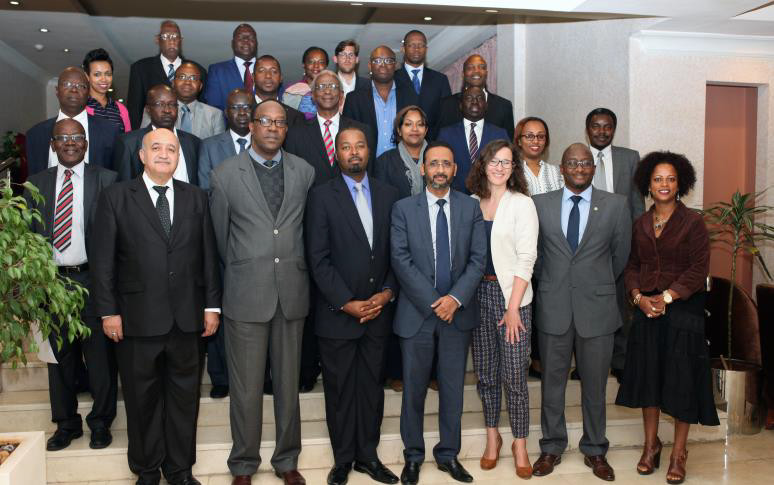
The Programme for Infrastructure Development in Africa (PIDA) Steering Committee today concluded its two-day deliberations on the current status, the challenges and ways to improve the implementation of the continental programme, which will come under strong review at the PIDA Week, slated to be held from 10 to 14 December in Swakopmund, Namibia.
In his opening remarks, the Director for Infrastructure and Energy at the African Union Commission highlighted some of PIDA’s achievements since its inception in 2012.
The Director also expressed his gratitude to the Government of Namibia for accepting to co-host the 2017 PIDA Week in Swakopmund, Namibia under the auspices of the Southern African Development Community (SADC).
“The continent has high expectations from the Third Edition of PIDA Week and I call on all stakeholders not to let it down, said Mr. Bedda, summing up a tone of urgency in the choice of invitees and the best conditions for the promotion of the projects that will be showcased during the event.
The Director further informed delegates that the PIDA projects would be showcased during the upcoming AU-EU Summit, planned for November 2017 in Cote D’Ivoire.
“PIDA will be featured as an agenda item during the Business Forum of the AU-EU Summit and hence it is up to us to seize this unique opportunity to better promote our projects,” Director Bedda concluded.
On his part, Mr. Symerre Grey-Johnson, Head of Regional Integration Infrastructure and Trade at the NEPAD Agency opined that that the meeting is the adequate forum to generate strategic solutions to the challenges that will be jointly identified, particularly regarding the realisation of the PIDA Priority Action as we are approaching 2020.
“We continue to think out of the box to seek innovative mechanism for infrastructure financing in Africa. The NPCA just launched the 5% Agenda which aims to mobilize domestic funds for infrastructure by rising Pension and sovereign wealth fund up to 5% of their investment,” Mr. Grey-Johnson told the meeting.
Mr. Grey-Johnson concluded by calling on all delegates on the need to embark on a consultative process to get input on the design of the PIDA PAP Phase Two as the end of the current phase is imminent.
Representing the African Development Bank, Mr. Mtchera Chirwa commended the partnership between the AUC, NEPAD Agency and AfDB under PIDA, which has achieved results in developing Africa’s infrastructure. He also reiterated the Bank’s continued prioritization for preparation and financing of PIDA projects within its pipelines. He called on the Steering Committee to start planning for the preparation of the next PIDA Priority Action Plan (PAP) to take effect upon conclusion of the current PAP in 2020.
The meeting had fruitful discussions around the preparation of PIDA Week particularly on how to fast-track the finalization of the concept note and agenda of the meeting and this was also tied in with the PIDA Week Communication Strategy presentation to which members requested to take a fresh approach focusing on beneficiaries of PIDA projects. The meeting also took note of the funding gap for PIDA Week, which should be urgently addressed.
The Steering Committee heard presentations on the status of the implementation of PIDA PAP, the preparation of the PIDA Progress Report 2017, PIDA Monitoring and Data Collection system, the Virtual PIDA Information Centre and the status of the various initiatives that facilitate PIDA implementation including the Service Delivery Mechanism (SDM), the Continental Business Network, the NEPAD Infrastructure Project Preparation Facility (IPPF) and Africa 50. Organizations’ engagements during the upcoming AU-EU Summit were also discussed.
The meeting also heard reports from the Community of Sahel-Saharan States (CEN-SAD), the East African Community (EAC), the Economic Community of West African States (ECOWAS), the Southern African Development Community (SADC) and the Union of Arab Magreb (UMA) on the implementation of the PIDA Priority Action Plan (PAP) projects within their regions.
The PIDA Steering Committee is the highest technical body tasked with fostering overall coordination of implementation efforts by various stakeholders and to provide general policy guidance and facilitation for smooth implementation PIDA.
The two-day meeting was jointly organized by the African Union Commission (AUC) and the NEPAD Planning and Coordinating Agency (NPCA), was co-chaired by the African Development Bank (AfDB) and supported by GIZ. About 30 delegates representing the AUC, the NEPAD Agency, the AfDB, ECA, the European Union, GIZ, five Regional Economic Communities were in attendance.
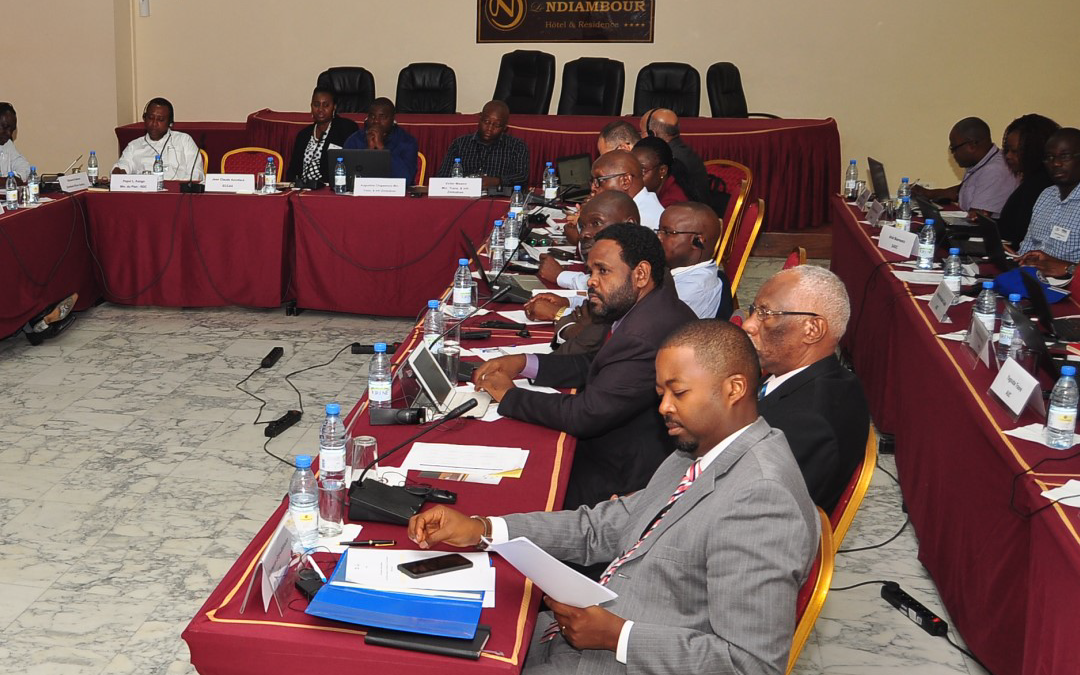
Mr Symerre Grey-Johnson, Head of Regional Integration, Infrastructure and Trade, officially opened the first round of NEPAD-Programme for Infrastructure Development in Africa (PIDA) training on Public Private Partnerships (PPP), co-funded by the African Union Commission and GIZ in Dakar Senegal, from 26 – 30 September. (more…)

The first meeting of the steering committee and experts of the Continental High Speed Rail Network project opened on Monday 25 September in Dakar, with the aim of sharing the experiences of member countries while waiting for the feasibility study. (more…)