H.E. Mr. HORIUCHI Toshihiko, Ambassador Extraordinary and Plenipotentiary, Mission of Japan to the African Union
On the very important occasion of the pre-launch of 10 Year PIDA Progress Report, firstly I would like to express my sincere gratitude to all AUDA-NEPAD team members who devoted their efforts to this pre-launch. While congratulating on the completion of the report, I would like to introduce the Japanese engagement toward PIDA as well as Japan-Africa Partnership through decades- long Tokyo International Conference on African Development (TICAD).
(1) Japan`s Contributions to PIDA
PIDA incorporates two visions advocated by Japan: the concept of Corridor Development and the philosophy of Africa’s ownership in which Japan listens to the voices of Africa. Firstly, the concept of Corridor Development is based on the recognition that promotion of the development of Africa would be difficult without cross-regional analysis. That helps us to find out what the bottlenecks are, for example, in transporting goods from ports through trunk roads to landlocked countries over national borders. Corridor Development is expected to be further promoted toward its completion in 2040. In this context, Japan would like to combine the expertise and resources of both AUDA-NEPAD and JICA, build stronger partnerships, and support infrastructure development across the African continent. Here in Kenya as well, in order to contribute to the realization of PIDA, the Japanese government and JICA helped formulate the Master Plan (M/P) on Logistics in Northern Economic Corridor in 2016. Based on this M/P, multiple projects such as the expansion of Mombasa Port and the construction of future Mombasa Gate Bridge have been underway. The 10-year PIDA Progress Report shows a concrete achievement of the last decade and answers to the current challenges. I would like to point out one of the impressive findings: the question of who is the biggest contributor to the PIDA projects. It is nothing but African countries themselves. This is a strong statement that PIDA is an infrastructure policy framework of Africa, by Africa, and for Africa.
(2) Japan-Africa Partnership through TICAD
The other vision advocated by Japan in PIDA is the basic philosophy of Africa’s ownership that listens to the voices of Africa, which constitutes an imperative philosophy of TICAD. Launched by Japan in 1993, TICAD is one of the oldest and the most inclusive partnership platforms with Africa. TICAD has always shed light on the importance of ownership by Africa and partnership by the international community as an imperative philosophy, and both Japan and Africa have cherished the fruits of TICAD to this day. The Eighth Tokyo International Conference on African Development (TICAD 8) was held in Tunis on August 27 and 28, 2022, co-organized by the Government of Japan, the United Nations, the United Nations Development Programme (UNDP), the World Bank and the African Union Commission (AUC). During TICAD 8, Prime Minister Kishida Fumio expressed the commitment of Japan to stand together with Africa in this critical juncture, exacerbated by global challenges. To fulfill this commitment, Japan announced that it would invest 30 billion USD as the sum of public and private financial contributions over the next three years, with an emphasis on investment in people and the quality of growth. TICAD 9 is scheduled to be held in Japan in 2025. Counting on in our cooperation, it is often said that infrastructure realized by Japan’s cooperation in Africa works for a long time. Based on this brand, Japan will continue to promote the development of Quality Infrastructure that is resilient against disasters by leveraging the advanced technology and know-how that Japanese companies have. Furthermore, at the G7 Hiroshima Summit held in Japan in May 2023, we reaffirmed our shared commitment to “The Partnership for Global Infrastructure and Investment (PGII) ” launched by the G7. We also aim to mobilize up to 600 billion US dollars by 2027 together with the G7. In addition, through the Quality Infrastructure Conferences (GIC) held bilaterally with 14 countries since 2015, we will further promote to expand the business in Africa by Japanese companies.
(3) Conclusion
Japan has been utilizing external support generously offered by the international community in its struggle during the post-World War II reconstruction period. Japan was obliged to rebuild from scratch as it was devastated by the war. It was almost rebuilding a nation from the ashes. In addition to the hard works of our parents and grandparents who endeavored for the prosperity of Japan, Japan was also fortunate enough to enjoy the kindness and good will rendered by the international community. For instance, Shinkansen, the Japanese Bullet Train, is one of the fruits of international support for significant transportation infrastructure development that enabled Japan to overcome the challenges it faced. My dream is that one day Africa and Japan can further cooperate and pay it forward together for the sake of future generations! Once again, I would like to deliver congratulatory message on the completion of 10 Year PIDA Progress Report as the culmination of a strong and enduring partnership between AUDA-NEPAD and Japan that focuses on advancing African regional integration and infrastructure development. It is my hope that this report will serve as a signpost for real and positive change.

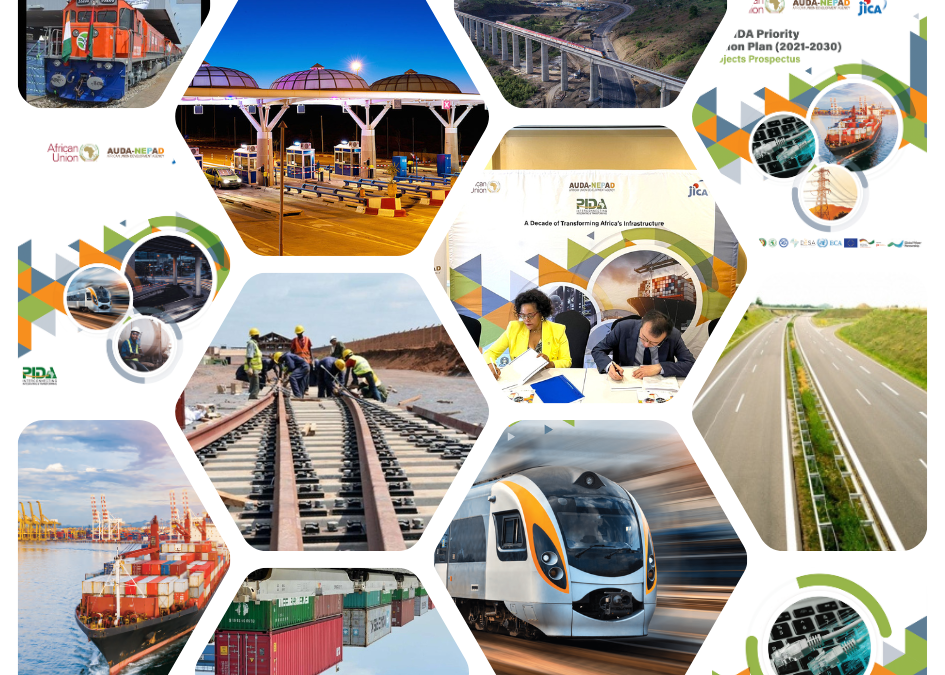
The African Union Development Agency-NEPAD (AUDA-NEPAD) and the Japan International Cooperation Agency (JICA) jointly hosted a momentous pre-launch ceremony in Nairobi, signifying ten years of remarkable progress in transforming Africa’s infrastructure landscape.
The event marked the successful completion of the highly anticipated “PIDA First 10-Year Implementation Report” and the visionary “2nd PIDA Priority Action Plan (2021-2030) Projects Prospectus”.
The ceremony, held during the 5th African Union Mid-Year Coordination Meeting, attracted distinguished guests, including H.E. Mrs. Nardos Bekele-Thomas, CEO of AUDA-NEPAD, H.E. Mr. HORIUCHI Toshihiko, Ambassador Extraordinary and Plenipotentiary, Mission of Japan to the African Union and Mr. NAKAMURA Toshiyuki, Special Advisor to JICA President and Former Senior Vice President of JICA. Their presence underscored the significance of this milestone achievement.
H.E. Mrs. Nardos Bekele-Thomas, CEO of AUDA-NEPAD and H.E. Mr. HORIUCHI Toshihiko, Ambassador Extraordinary and Plenipotentiary, Mission of Japan to the African Union Displaying the 10 Year PIDA Report
In her opening remarks, H.E. Mrs. Nardos Bekele-Thomas emphasized the critical role of infrastructure development in stimulating growth, fostering global integration and elevating living standards. She highlighted that supporting Africa’s infrastructure is not only supporting the continent but also the world.
One of the report’s noteworthy findings, as highlighted by H.E. Mr. Toshihiko, was that AU member states emerged as the primary financial contributors. This revelation reaffirms PIDA’s unique standing as an infrastructure policy framework designed by Africa, for Africa.
Mr. Nakamura Toshiyuki, Special Advisor to JICA President, acknowledged PIDA’s alignment with the principles of ownership and corridor development, which JICA has steadfastly supported through the TICAD process. He expressed confidence that the report’s successful completion would act as a catalyst for enhanced resource mobilization for PIDA projects.
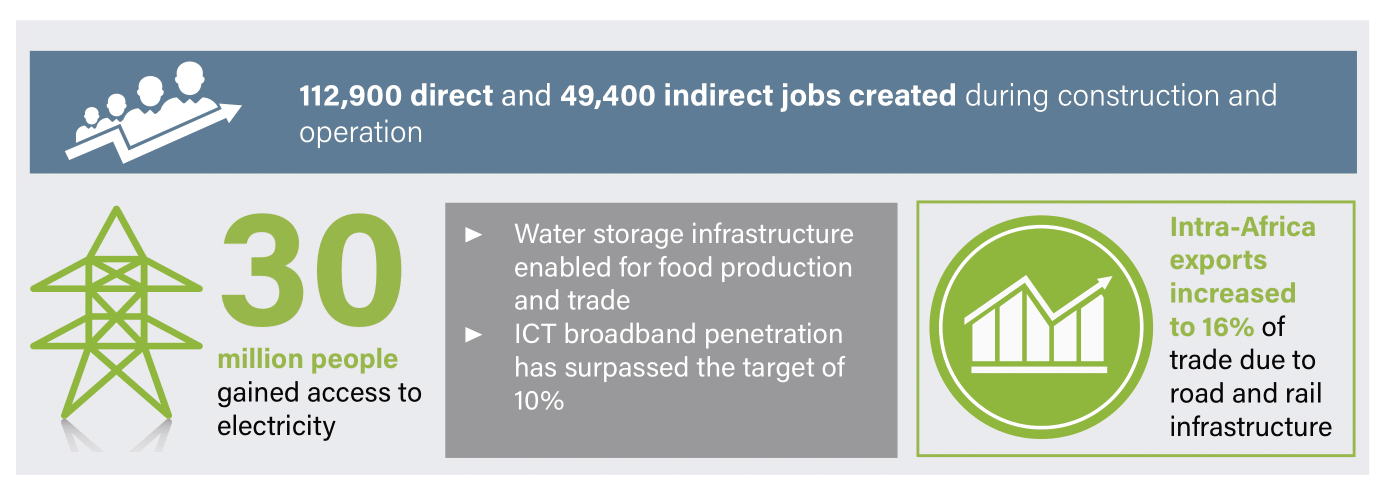
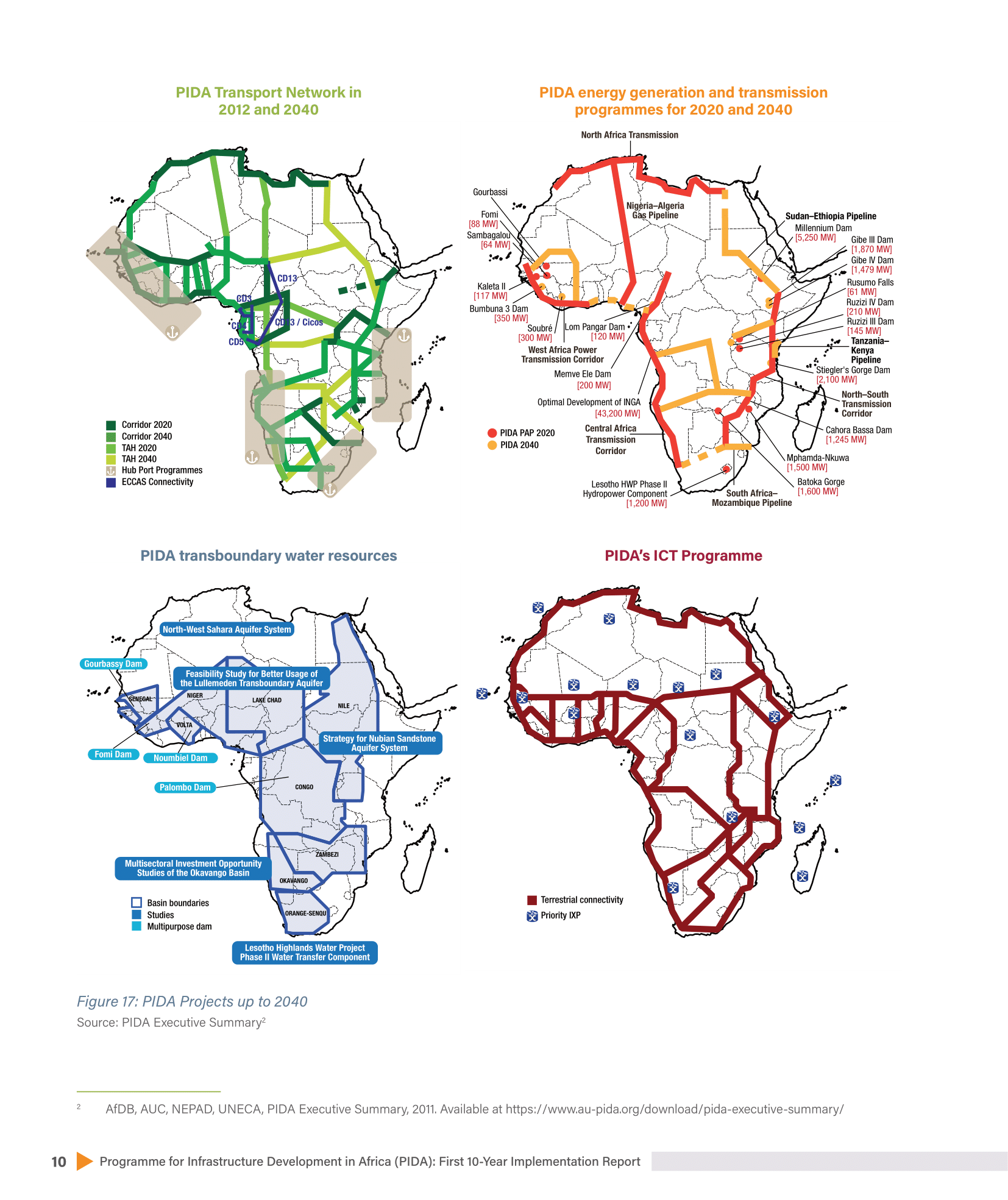
PIDA, a strategic continental initiative spearheaded by the African Union Development Agency (AUDA-NEPAD), aims to accelerate infrastructure development across Africa by addressing the continent’s infrastructure deficit and promoting regional integration, economic growth, and sustainable development. Encompassing sectors such as transport, energy, water, and ICT, PIDA fosters economic development, trade, and connectivity. By 2040, PIDA has set ambitious targets, including the implementation of cross-border infrastructure projects to bolster connectivity, trade, and access to reliable and sustainable services. The initiative is also expected to have a significant impact on increased investment in infrastructure projects, improved regional integration, job creation, and sustainable economic growth in African countries.
The official launch of the “PIDA First 10-Year Implementation Report” is scheduled for September, during the 4th Ordinary Session of the African Union Specialized Technical Committee on Transport, Transcontinental and Interregional Infrastructure, and Energy (STC-TTIIE) in Zanzibar, Tanzania. As the journey to drive infrastructure development across Africa continues, the world eagerly awaits the transformative outcomes of PIDA’s decade-long dedication to revolutionizing Africa’s infrastructure landscape.
Statement by Mr. HORIUCHI Toshihiko, Ambassador Extraordinary and Plenipotentiary, Mission of Japan to the African Union
H.E. Mr. HORIUCHI Toshihiko, Ambassador Extraordinary and Plenipotentiary, Mission of Japan to the African Union
On the very important occasion of the pre-launch of 10 Year PIDA Progress Report, firstly I would like to express my sincere gratitude to all AUDA-NEPAD team members who devoted their efforts to this pre-launch. While congratulating on the completion of the report, I would like to introduce the Japanese engagement toward PIDA as well as Japan-Africa Partnership through decades- long Tokyo International Conference on African Development (TICAD).
(1) Japan`s Contributions to PIDA
PIDA incorporates two visions advocated by Japan: the concept of Corridor Development and the philosophy of Africa’s ownership in which Japan listens to the voices of Africa. Firstly, the concept of Corridor Development is based on the recognition that promotion of the development of Africa would be difficult without cross-regional analysis. That helps us to find out what the bottlenecks are, for example, in transporting goods from ports through trunk roads to landlocked countries over national borders. Corridor Development is expected to be further promoted toward its completion in 2040. In this context, Japan would like to combine the expertise and resources of both AUDA-NEPAD and JICA, build stronger partnerships, and support infrastructure development across the African continent. Here in Kenya as well, in order to contribute to the realization of PIDA, the Japanese government and JICA helped formulate the Master Plan (M/P) on Logistics in Northern Economic Corridor in 2016. Based on this M/P, multiple projects such as the expansion of Mombasa Port and the construction of future Mombasa Gate Bridge have been underway. The 10-year PIDA Progress Report shows a concrete achievement of the last decade and answers to the current challenges. I would like to point out one of the impressive findings: the question of who is the biggest contributor to the PIDA projects. It is nothing but African countries themselves. This is a strong statement that PIDA is an infrastructure policy framework of Africa, by Africa, and for Africa.
(2) Japan-Africa Partnership through TICAD
The other vision advocated by Japan in PIDA is the basic philosophy of Africa’s ownership that listens to the voices of Africa, which constitutes an imperative philosophy of TICAD. Launched by Japan in 1993, TICAD is one of the oldest and the most inclusive partnership platforms with Africa. TICAD has always shed light on the importance of ownership by Africa and partnership by the international community as an imperative philosophy, and both Japan and Africa have cherished the fruits of TICAD to this day. The Eighth Tokyo International Conference on African Development (TICAD 8) was held in Tunis on August 27 and 28, 2022, co-organized by the Government of Japan, the United Nations, the United Nations Development Programme (UNDP), the World Bank and the African Union Commission (AUC). During TICAD 8, Prime Minister Kishida Fumio expressed the commitment of Japan to stand together with Africa in this critical juncture, exacerbated by global challenges. To fulfill this commitment, Japan announced that it would invest 30 billion USD as the sum of public and private financial contributions over the next three years, with an emphasis on investment in people and the quality of growth. TICAD 9 is scheduled to be held in Japan in 2025. Counting on in our cooperation, it is often said that infrastructure realized by Japan’s cooperation in Africa works for a long time. Based on this brand, Japan will continue to promote the development of Quality Infrastructure that is resilient against disasters by leveraging the advanced technology and know-how that Japanese companies have. Furthermore, at the G7 Hiroshima Summit held in Japan in May 2023, we reaffirmed our shared commitment to “The Partnership for Global Infrastructure and Investment (PGII) ” launched by the G7. We also aim to mobilize up to 600 billion US dollars by 2027 together with the G7. In addition, through the Quality Infrastructure Conferences (GIC) held bilaterally with 14 countries since 2015, we will further promote to expand the business in Africa by Japanese companies.
(3) Conclusion
Japan has been utilizing external support generously offered by the international community in its struggle during the post-World War II reconstruction period. Japan was obliged to rebuild from scratch as it was devastated by the war. It was almost rebuilding a nation from the ashes. In addition to the hard works of our parents and grandparents who endeavored for the prosperity of Japan, Japan was also fortunate enough to enjoy the kindness and good will rendered by the international community. For instance, Shinkansen, the Japanese Bullet Train, is one of the fruits of international support for significant transportation infrastructure development that enabled Japan to overcome the challenges it faced. My dream is that one day Africa and Japan can further cooperate and pay it forward together for the sake of future generations! Once again, I would like to deliver congratulatory message on the completion of 10 Year PIDA Progress Report as the culmination of a strong and enduring partnership between AUDA-NEPAD and Japan that focuses on advancing African regional integration and infrastructure development. It is my hope that this report will serve as a signpost for real and positive change.

Nairobi, Kenya – On the margins of the African Union (AU) Mid-Year Summit, the AU Commission (AUC) and the African Union Development Agency – NEPAD (AUDA-NEPAD) successfully organized a coordination meeting with Regional Economic Communities (RECs) to discuss the acceleration of infrastructure development and regional integration in Africa.
The meeting, held in Nairobi, Kenya focused on agreeing on joint actions to accelerate the implementation of the Programme for Infrastructure Development in Africa (PIDA).
A cross-section of stakeholders captured during the meeting
Insufficient infrastructure constantly hinders Africa’s economies and the continent’s efforts to fully participate in the global economy. The coordination meeting marked a significant milestone as the first phase of PIDA (PIDA PAP I) completed ten years of implementation and transitioned into the second phase (PIDA PAP II) which is focused on an Integrated Corridor Approach and inclusivity. The second phase features 69 projects selected from all regions of the continent. The aim was to ensure that corridor infrastructure interconnects and complements each other while integrating social and sustainability features into the planning process.
Mr. Idriss Amine Adoum, the Director of Infrastructure, Industrialisation, and Trade at AUDA-NEPAD, highlighted the importance of PIDA in addressing Africa’s infrastructure challenges. He stated thatthrough PIDA, progress has been made in improving connectivity and fostering regional integration. He highlighted that there are however, still obstacles to overcome, such as limited financing and inadequate capacity for project preparation.
“This coordination meeting aimed to bring the key players together to explore innovative solutions impactful infrastructure development.“, he said.
Insightful discussions were held during the meeting, focusing on reviewing progress made, achievements and lessons learnt from implementing PIDA projects. Attendees explored innovative financing mechanisms, instruments, and partnerships to mobilize additional resources for infrastructure development. The participants also shared best practices, experiences, and knowledge on infrastructure development and regional integration .
AUDA-NEPAD reported significant progress made, including the presentation of 22 projects to financiers at the Dakar Financing Summit, from which ten projects received strong interest with potential financing opportunities. A roadmap was also developed to guide further actions.
Dr. Kamugisha Kazaura, the Director of Infrastructure and Energy at the African Union Commission, emphasized the importance of coordination, stating, “By strengthening coordination and synergy among AUDA-NEPAD, AUC, RECs and other key players, we can achieve greater efficiency and impact
The meeting represented a vital step towards enhancing infrastructure development, promoting regional integration, and driving Africa’s socio-economic growth. It showcased the commitment of AUC, AUDA-NEPAD, RECs, and other stakeholders to work together, harness resources and overcome challenges for the benefit of the continent.
Looking ahead, participants at the meeting agreed to identify ways to address the challenges impacting the implementation of PIDA projects. Factors such as country-level debt burdens, the ongoing effects of the COVID-19 pandemic and inflationary pressures that have undoubtedly affected infrastructure development.
To ensure that 2040 targets, it is essential to explore strategies that can accelerate the implementation process- this includes enhancing project preparation, mitigating risks and finding innovative solutions to mobilize funding and resources.

The Harmonisation of Regulatory Frameworks of Road Transport in Africa is a groundbreaking initiative that seeks to bring together African nations to discuss and implement cohesive and streamlined policies for road transport across the continent.

Study tour to Heidelberg Traffic Control Centre on the Johannesburg-Durban highway which is the busiest section on the regional North South Corridor.
The workshop held at Birchwood Hotel in Johannesburg, South Africa, aims to foster economic development, improve road safety, and enhance the overall efficiency of road transportation in Africa by harmonizing and standardising regulations and promoting digitalisation in road transport across the continent.
Organised by the African Union Commission (AUC) in collaboration with the Transport and Transit Facilitation Programme (TTTFP), the meeting was attended by government officials, policymakers, regulators, transport experts, partners and concerned delegates from African Union Member States who came together with shared vision of improving the continent’s road transport sector. Additionally, representatives from Regional Economic Communities (RECs) African Union Commission (AU), AUDA-NEPAD, and European Union (EU) were present, further emphasizing the importance of a coordinated and unified approach to this important issue.
The workshop also included representatives from various transport corridor management organizations, who provided valuable insights into the unique challenges and opportunities associated with specific regional transport corridors in Africa. With joint support from the African Union and the European Union, this workshop highlights ongoing efforts to support infrastructural development and improved transportation systems on the African continent.
By reviewing and assessing the current regulatory frameworks and the gaps between the frameworks, the workshop has facilitated information sharing, study tours, and demonstrations of vehicle load management to identify gaps and areas for improvement. Furthermore, it has highlighted the importance of ICT systems as an integral part of the overall process to improve road transport. ICT introduces efficiency, limits opportunities for corruption and facilitate sharing of information between transport, logistics, and trade entities and operators.

Delegates at the AUC-TTTFP Workshop attentively listening to a presentation
The workshop has also fostered dialogue and cooperation among African countries and relevant institutions to harmonise regulatory frameworks and to develop strategies and action plans to manage this sector across the continent. These collective efforts will help reduce the negative impact of overloading on road infrastructure, improve overall road safety, and accelerate the harmonisation of road transport instruments, ultimately leading to the development of an integrated road transport framework for Africa. This is critical as road transport is key to facilitating the implementation of the AfCFTA, given that 80% of trade currently moves by road and AfCTA is expected to stimulate transport demand by 28%.

Delegates at the workshop pose for a group photo
The study tour to Heidelberg Traffic Control Centre on the Johannesburg-Durban highway which is the busiest section on the regional North South Corridor, also provided an avenue to enhance the understanding of the participants on how weighbridges can be standardised and implemented across the continent to minimise damage to road infrastructure and enhance road safety, which would serve as a step forward in terms of replicating best practices from countries that commenced similar practices ahead.
The Workshop has made significant strides in achieving its primary objectives paving the way for the realization of a more integrated, efficient, and sustainable road transport sector across the continent
Access to Workshop materials including various presentations and documentation on harmonising road regulatory frameworks