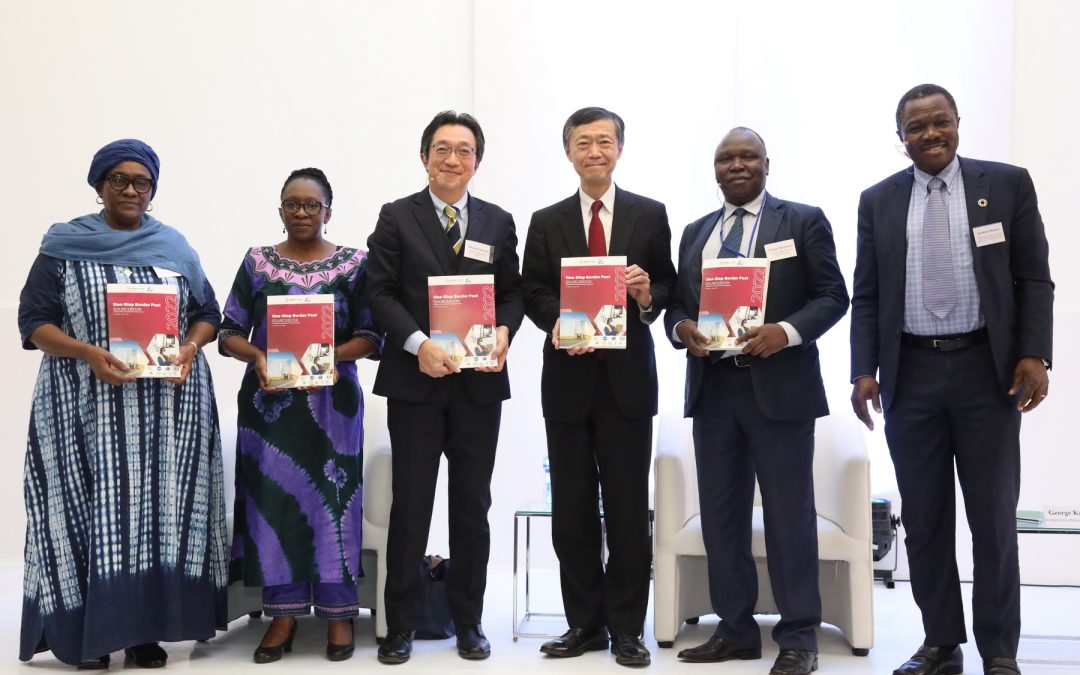

The African Union development Agency-NEPAD (AUDA-NEPAD) and the Japan International Cooperation Agency (JICA) have launched the 3rd edition of the One-Stop Border Post Sourcebook on the margins of the Pre-TICAD event hosted at the Wanderers Club in Johannesburg, South Africa. The OSBP Sourcebook is a key resource that elaborates the One-Stop Border Post concept and provides guidelines on OSBP operations. The 3rd edition has been prepared in alignment with Agenda 2063 as Africa moves towards a single customs union through the African Continental Free Trade Area (AfCFTA).
Speaking at the launch, on behalf of the CEO of AUDA-NEPAD, Ms. Nardos Bekele-Thomas, the Head of Economic Integration, Dr. Towela Nyirenda-Jere said that the 3rd edition comes at a significant time where the Continent is on the one hand dealing with the impacts of COVID-19 on cross-border movements and on the other, considering the role of border posts in the operationalization of the AfCFTA. “Another focus is the need to incorporate lessons from the COVID-19 pandemic. The pandemic has affected trade and cross-border traffic, and it has required implementation of strict protocols and the setting up of social infrastructure to prevent the transmission of the virus.”, she said. The Sourcebook was launched on the margins of the pre-TICAD event themed “Towards TICAD8: Advancing Africa’s Economic Integration in the Post-Crisis era”.
Click on the link to access the Sourcebook in English and French.
The Ambassador of Japan to South Africa, H.E Norio Maruyama reminded guests that ownership and partnerships are fundamental pillars for the comprehensive development of Africa. In this regard, Japan clarified its policy on supporting NEPAD in 2003 and has continued to partner with AUDA-NEPAD through strengthened cooperation mainly in the fields of regional integration, industrial development, nutrition, private sector support and research. This cooperation is a contribution to the development of the continent through African ownership initiatives.
The Panel discussants moderated by Ms. Jennifer Susan Chiriga, AUDA-NEPAD Chief of Staff, highlighted the need to think about the future of the Continent and the need to strengthen African institutions, Infrastructure Development, and an overall focus on ‘smart partnerships’. When asked what their key takeaways would be from this session, the Resident Representative of UNDP South Africa, Mr. Ayodele Odusola said: “ We must ensure that whatever we do, we put the people at the center of the development process” . Mr George Kararach, Lead Economist at the African Development Bank highlighted in his ‘take-away’ that AfDB views AfCFTA as more than just infrastructure. ‘ We see AfCFTA as food security, as Capacity Building, health etc.”, said Kararach. “We want to see a stable and peaceful Africa”, said the Senior Vice President of JICA, Mr. Toshiyuki Nakamura.
The conversations on Africa’s response to crises, such as COVID-19 will surely continue at the 8th Tokyo International Conference on African Development in August 2022. The conference brings together African Nations, International organizations, the private sector, and civil society to deliberate on the common goal of the development of Africa.
Download to read the complete publication, English | French
The challenge of access to energy has been recognised at the level of the African Union Agenda 2063 the Sustainable Development Goals (SDGs). Goal 7 of the SDGs aims at achieving universal access to affordable, reliable, sustainable, and modern energy by 2030, while Agenda 2063 Goals 1, 7 and 10 have targets for an increase of 50% in electricity generation, 50% distribution and 70% of Africans having access to electricity by 2023.
Furthermore, low levels of resilience to the threats such as COVID-19 in institutions of learning is a persistent challenge across Africa. Key among the causes of vulnerability of institutions across the continent is low productive capacity, especially a lack of access to key production drivers such as energy. Immediate resilience building interventions to respond to COVID-19 externalities are urgently required to cushion institutions of learning and rural households from anticipated severe short to long-term impacts. An effective response to the COVID-19 shock calls for simple, yet impactful, quick turn-around interventions that mitigate impacts in the short-term while building resilience in the long term.
It is in this context that this renewable energy project is an AUDA-NEPAD led response to the recommendation of the African Union High Level Panel on Emerging Technologies (APET), specially as part of the outcomes of the Dakar Policy Dialogue, to mitigate COVID-19 pandemic externalities.
Njala, in Sierra Leone, is a farming community with over 10,000 thousand inhabitants in which the Njala University campus was stablished in year 1964 with presently over 10 000 students and 220 staff devoid of basic amenities such as electricity and access to clean water. This puts pressure on the institution in terms of teaching, research development and to the women and youth of the entire community to meet up their domestic needs, including livestock production.
The university campus consists of the secretariat, students’ quarters and academic lecture auditoriums. The administrative secretariat provides essential educational services against severe capacity limitation due to lack of electricity. The campus has since been powered by a thermal generator of which the cost of operation is too high for the institution, hence the rationing of power which inhibits adequate hours of learning, thereby impacting negatively on quality of learning..
Consequent to the 100Kw energy system already delivered to Njala university in year 2021 to support access to digital health delivery services to university students, women, youth and the community of Njala at large, this additional deployment of 50Kw solar Pv energy generation aims to increase access to electricity supply. It will drive accelerated educational service delivery and institutional strengthening to Njala university in the fight against the current pandemic and beyond, while lifting academic productivity, living standards and livelihoods of the entire Njala community.
Project implementation
This 50Kw Solar PV energy generation system was awarded to Aptech Africa Limited as the executing firm in December 2021 through the Renewable Energy Unit of the Environmental Sustainability division of AUDA-NEPAD, with Mr Benjamin Akobundu as the Project Manager. It was fully completed in May 2022.
The implementation of this project was also monitored by University of Njala Project Monitoring Committee in conjunction with the Government of Sierra Leone through the Ministry of Energy. The project has also received the full acceptance of Inspection and Receiving Committee of AUDA-NEPAD.
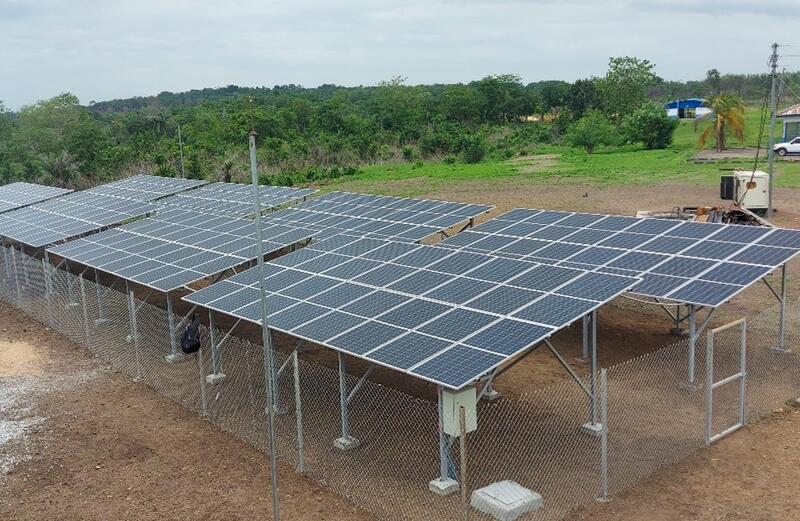
Installed 50kw solar Pv energy system
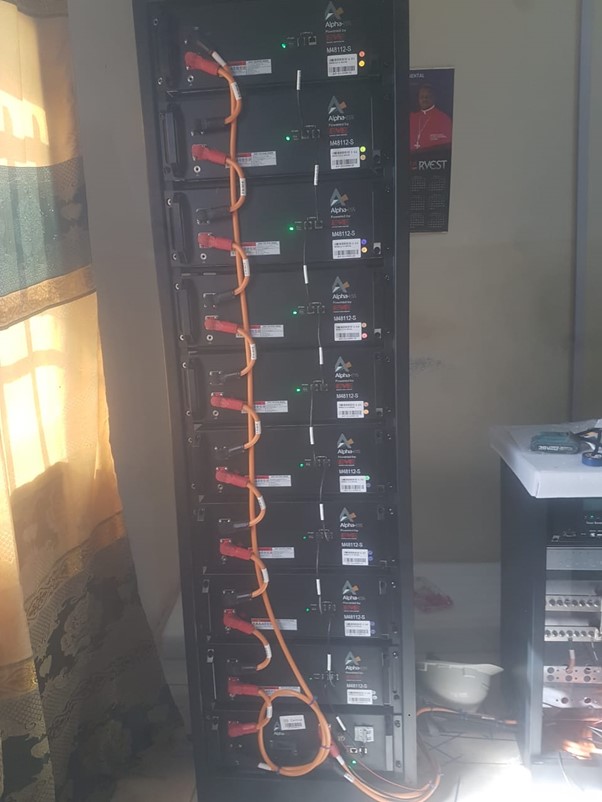
The Battery System
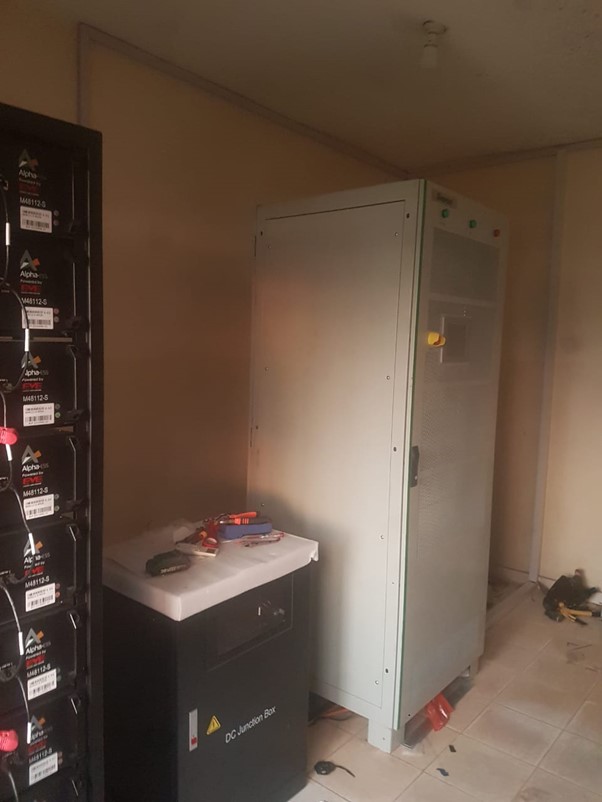
Management System and Inverter
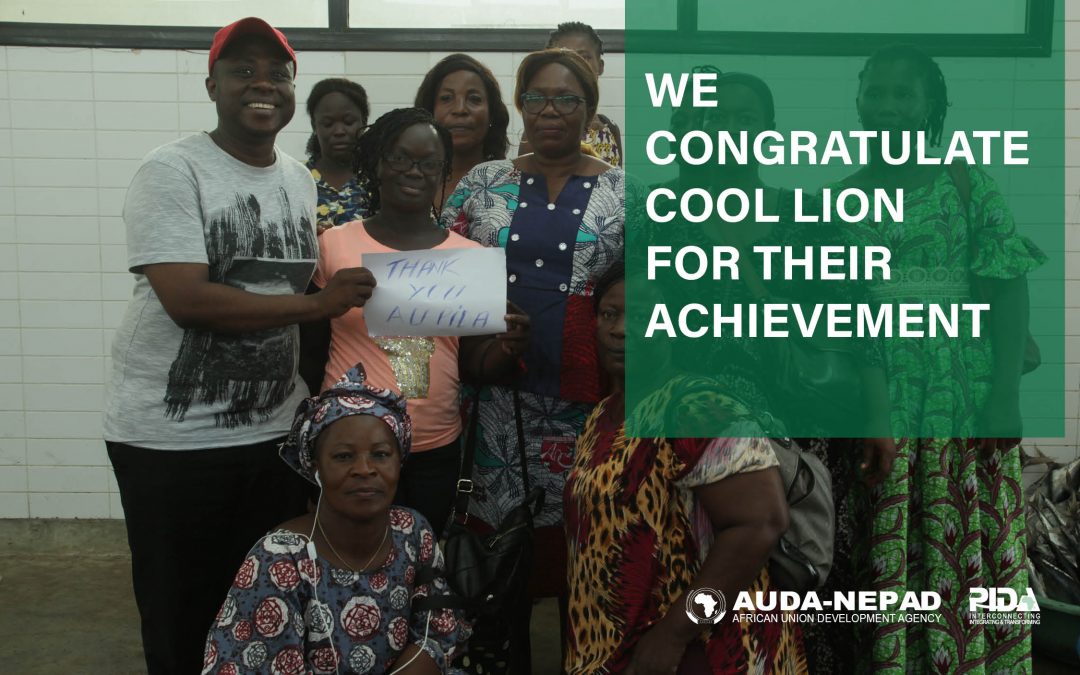

In 2021, the African Union Development Agency (AUADA-NEPAD) together with Deutsche Gesellschaft für Internationale Zusammenarbeit (GIZ) offered technical advisory to Micro, Small, and Medium Enterprises (MSMEs) through a Covid-19 Call for Proposals by AUDA-NEPAD’s Continental Business Network (CBN). Following the technical advisory offered by AUDA-NEPAD and GIZ support, Cool Lion launched a demonstration site in Abidjan, Côte d’Ivoire to showcase the product to prospective clients, mobilized USD25.000 grant funding from the Institute of Food Technologists (IFT) Foundation. The company was selected as one of the 25 finalists of the Milken-Motsepe Prize for which they receive USD10.000 to further develop and test their designs. Furthermore, Cool Lion received a EUR261.481 grant from the EU – African, Caribbean, and Pacific (ACP) Innovation Fund project on Accelerating Inclusive Green Growth through Agri-based Digital Innovation in West Africa (AGriDI). The Covid-19 Call for proposals offered technical assistance valued at EUR96.500 this comprised of a business plan, financial model, employment action plan, marketing collateral, and an opportunity to present to three prospective investors for business prospects.
Cool Lion is one of the MSMEs selected through a competitive continent-wide process and received technical advisory support to boost and improve its business prospects for investment opportunities. In addition, Cool Lion was selected as a pilot project under the Compact with Africa to receive technical assistance to mobilize financing for the project’s implementation and to carry out an employment analysis. Cool Lion contributes to eight of the UN Sustainable Development Goals, including Zero Hunger by providing access to storage means that minimize food waste and prolong the shelf-life of fresh food, Good Health, and Well-being by reducing respiratory disease-causing black carbon emissions associated with the current method of smoking fish and Industry, Innovation, and Infrastructure.
Cool Lion provides sustainable, cold chain solutions through the fabrication and sale of affordable, solar-powered, refrigerated solar-powered refrigerated containers for social impact. The main target markets are fishing and horticultural produce sellers. To service these markets, Cool Lion offers a range of different container configurations with a choice of power source, temperature, and size, manufactured according to the needs of each customer. Its human-centered design process used inputs from the National Women’s Association of Fishmongering in Côte d’Ivoire (UNSCOFEPCI) which comprises 13 cooperatives and over 1,000 members.


OSBPs [One-Stop Border Posts] help to significantly reduce the time and cost it takes for goods and traders to cross borders, through the processing of border clearance under one roof. The OSBP Sourcebook, an operational guide to the OSBP concept, covers issues such as legal & regulatory frameworks, simplification & harmonisation of border procedures, physical border facilities, and making the best use of ICT.
Since the publication of the 2nd edition of the OSBP Sourcebook in May 2016, two major developments – the launching of the African Continental Free Trade Area (AfCFTA) and the COVID-19 pandemic – have resulted in a need to revise the Sourcebook with preparation of a 3rd edition. The African Union Development Agency-NEPAD (AUDA-NEPAD), with support from the Japan International Cooperation Agency (JICA) (and its consultant, PADECO Co., Ltd. of Japan), has undertaken work to revise the 2nd edition of the Sourcebook, through technical research, technical consultation meetings, and interviews and questionnaire surveys of key OSBP-related stakeholders. The overall objective is to reflect lessons drawn from practical experience in operationalizing OSBPs – especially regarding the AfCFTA and COVID-19 – in the 3rd edition of the OSBP Sourcebook.
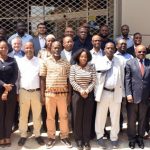
Group Photograph: Technical Consultation Meetings (January and March 2022)
As part of this process to prepare the 3rd edition of the OSBP Sourcebook, consultations were undertaken with various stakeholders associated with OSBPs to collect the required information. This has included a questionnaire survey, interviews, and technical consultation meetings in January and March 2022.
The first technical consultation meeting – held in January 2022 – brought together over 30 OSBP-related stakeholders and covered a wide range of issues, including (1) the concept and role of OSBPs toward the achievement of a Continental Customs Union; (2) physical facilities and ICT technology; (3) small traders and border communities; (4) health procedures and protocols; (5) legal and institutional frameworks; (6) border security; and (7) OSBP procedures and case studies. Among other issues, the first technical consultation meeting stressed the importance of interconnectivity of customs systems and other complementary interventions.
The second technical consultation meeting in March 2022 brought together about 30 OSBP-related stakeholders with discussions focused on (1) the AfCFTA, regional integration, and OSBPs; (2) COVID-19 and OSBPs; and (3) ICT and OSBPs. The stakeholders discussed the role of OSBPs in the implementation of the AfCFTA; they noted the transition toward the Continental Customs Union, and reaffirmed that OSBPs can play a role as a first step in realising an integrated Africa. The stakeholders also discussed the role of OSBPs in reflecting new challenges arising from the COVID-19 pandemic and noted the importance of interconnectivity and the use of integrated platforms to monitor the movement of vehicles.

OSBP Concept (Source: OSBP Sourcebook)
With about 150 comments and other inputs from stakeholders, key outcomes of the technical consultation meetings included the following:
- As Africa moves toward continent-wide integration through the AfCFTA, it is necessary to reflect this continental agenda when preparing the 3rd edition of the Sourcebook.
- It will be important to reflect health and political contingencies, which have emerged since the publication of the 2nd edition of the Sourcebook.
- Beyond hard infrastructure, there is a need to pay more attention to soft infrastructure and the needs of specific communities (e.g., informal traders) and consider how to engage more partners, with an understanding of the cross-cutting needs for trade facilitation.
- It will be important to obtain more buy-in and reach as many stakeholders as possible and disseminate the outputs of the new OSBP sourcebook for further utilization “on the ground”.
The two consultation meetings were successfully managed to create a platform of engagement with highly committed leaders and experts on OSBPs and made enthusiastic steps forward toward the publication of the 3rd edition of the OSBP Sourcebook. Of great importance, the meeting enhanced mutual understanding among OSBP implementers/practitioners on issues arising from the AfCFTA and COVID-19 pandemic. As the next step, the final draft of the 3rd edition of the OSBP Sourcebook will be presented in alignment with the needs and expectations of the various stakeholders at a validation workshop in April 2022.
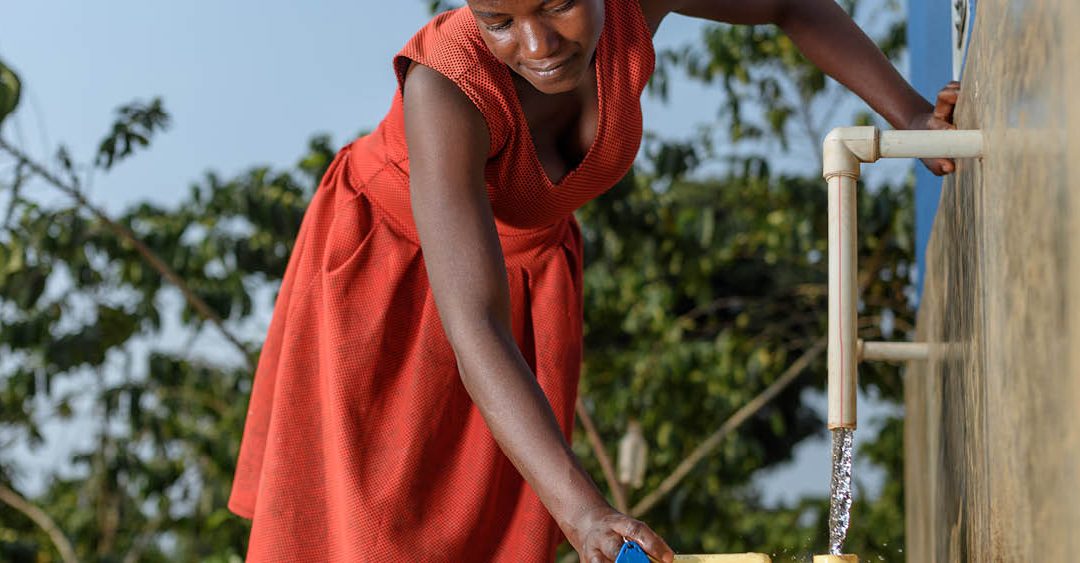

Micro, Small, and Medium-sized Enterprises (MSMEs) play outsized roles in African economies, contributing an estimated 80% of the continent’s workforce in both formal and informal sectors. The economic growth and long-term sustainability for emerging markets lie in the development of MSMEs. The onset of the COVID-19 pandemic and ensuing containment measures not only affected large corporate entities but also MSMEs which experienced even greater challenges accessing finance. The African Union Development Agency (AUDA-NEPAD) with GIZ technical advisory support to the Continental Business Network (CBN) responded to the needs of MSMEs. AUDA-NEPAD collaborated with GIZ to launch the Call for Proposals – COVID-19: Economic Recovery Through Infrastructure Service Delivery. The intended objective of the initiative was to support small-scale infrastructure projects by providing technical advisory support to MSMEs through CBN.
AUDA-NEPAD called upon MSMEs and Non-Governmental Organizations (NGOs) from the AU Members States to submit infrastructure project proposals for further technical advisory and market packaging to facilitate access to finance. Sixty-one MSMEs project applications were received through the call for proposal. All sixty-one MSMEs projects were screened for eligibility then assessed for commercial viability to access the support offered by AUDA-NEPAD. Fifteen (15) businesses were shortlisted for verbal pitch presentations. Of these, four MSMEs were selected for business development support via GIZ/AUDA-NEPAD across three out of the four target sectors, renewable energy, water/sanitation, and ICT.
The four selected MSMEs projects, namely Aquaethanol, Cool Lion, Tripesa, and Water Compass, were offered support in business plan development, financial modeling, and pitch deck development. The MSMEs were granted a platform framed under the CBN to present business plans to potential private sector investors. Two MSMEs projects out of the four selected projects secured financial access from private sector investors. Those two MSMEs projects are Cool Lion and Water Compass. Cool Lion, an Ivorian renewable energy & energy efficiency manufacturer mobilized the following: USD 25.000 grant (IFT Foundation), EUR 264.000 (~USD 304.141) grant (ACP-EU Agri DI Programme). Water Compass, a Ugandan solar water pump installer, and operator mobilized USD 100.000 grant (Edward H Butler Foundation).
The success of this initiative addressed fifteen Sustainable Development Goals (SDGs) including No Poverty, Zero Hunger, Good Health & Wellbeing, and Quality Education. This is part of the reason GIZ continues to support MSMEs in infrastructure project development. The role of MSMEs proved to be effective in contributing to socio-economic development, which is why AUDA-NEPAD and GIZ draw lessons learned from the Call for proposal. The institutions learned that digitalization is a key strategy in building MSME and community resilience. Early-stage MSMEs require support to develop viable business models but also to attract financing to pilot projects to prove concept and leverage funding later. The main concerns facing MSMEs include access to capital (challenges relating to accessing credit/debt, start-up capital working, and short-term capital and long-term capital) and technical advice (challenges relating to financial modeling, strategy, contract structuring, and specialist technical requirements).
The support to MSMEs continues with AUDA-NEPAD and GIZ Green Infrastructure Corridors for the Intra-Africa Trade (support to PIDA) program. The focus is on assisting MSMEs to access capital through sound technical advice with a focus on commercial viability, regulatory, procurement compliance, and trade readiness. GIZ support to AUDA-NEPAD will focus on digital solutions within the green infrastructure and trade domains. The second call for proposals will be opened by mid-2022 to early-stage and established MSME where the aim is to develop viable business models to attract financing to pilot projects and later stage MSMEs for expansion.