The establishment of the African Union Development Agency-NEPAD (AUDA-NEPAD) is part of the global reforms geared at improving the Union’s impact and operational efficiency. The mandate of AUDA-NEPAD is to coordinate and execute priority regional and continental projects to promote regional integration towards the accelerated realisation of Agenda 2063, and to strengthen capacity of African Union Member States and regional bodies by providing knowledge-based advisory support, resource mobilisation and technical interface with all Africa’s development stakeholders. The PIDA Quality Label (PQL) is a quality recognition by the AUDA-NEPAD Service Delivery Mechanism (SDM). It is awarded to projects that excel in the preparation of PIDA projects at an early stage.

“The AUDA-NEPAD’s PIDA Quality Label (PQL) reflects projects’ adherence to international best practices in infrastructure development and provides African Governments with a framework to achieve excellence throughout the projects’ definition and preparation phases. Building synergies between the PIDA Quality Label and SOURCE is an excellent opportunity to support project preparation and enhance infrastructure delivery in Africa.” Dr. Ibrahim Assane Mayaki, CEO, AUDA-NEPAD.
SOURCE is the multilateral platform for sustainable infrastructure led and funded by the MDBs and implemented by the Sustainable Infrastructure Foundation (SIF). SOURCE is a global and scalable IT platform, hosted by the United Nations, acting as a unique delivery system for the world’s best practices in infrastructure project preparation. Its structured data-based approach is designed to strengthen accountability, transparency and help informed decision-making against local, regional and global standards. As part of the MoU, AUDA-NEPAD will collaborate with SIF to link the Virtual PIDA Information Centre (VPIC) with SOURCE as well as to include instruments such as the SDM and PQL into the SOURCE project assessment module.
“AUDA-NEPAD’s unique network and expertise combined with the multilateral platform SOURCE’s unique features will give governments control over the creation of their pipelines of sustainable and well-prepared projects.” Christophe Dossarps, SIF, CEO.
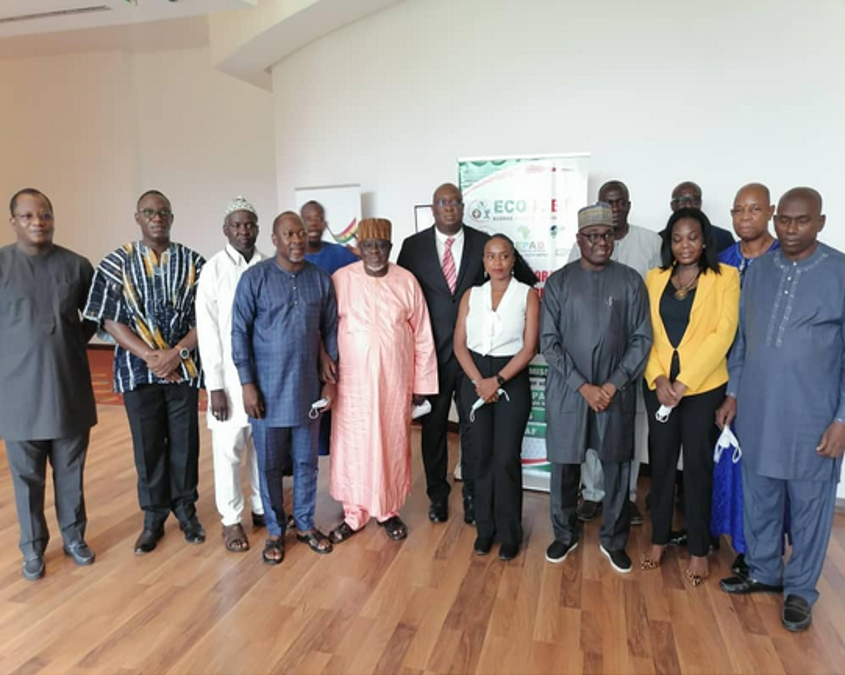
ECOWAS Commission, through the Trade Directorate, has collaborated with CILSS and the African Union Development Agency (AUDA-NEPAD) to conduct a kick-off capacity building workshop within the framework of the Informal Trade Regulatory Support Program (ITRSP). The first, among a series of capacity building workshops was held in Accra – Ghana, from the 28-30 July 2021.

The overall objective of the workshop, including the subsequent ones, was to build the capacity of enumerators, supervisors, webmasters, and relevant stakeholders involved in the effort at collecting and uploading informal cross border trade data on the region.
Despite the efforts of ECOWAS in consolidating the achievements of the integration process and its acceleration in order to benefit from the gains linked to trade and to take advantage of local cohabitation, official data reveal that the member countries of the ECOWAS trade less (12% – 13%) at the regional level than with the rest of the world.

Several studies have shown that the level of intra-regional trade covers only formal trade. Thus, informal trade escapes registration in the computer systems of customs administrations, which constitutes an important part of information on national economies. According to these studies, its contribution varies from 20% to 40% depending on the country.
The growing importance of informal trade in the economic and social life of ECOWAS States has prompted the ECOWAS Commission to formulate the Regional Informal Trade Regulation Support Program (ITRSP / PARCI).
As part of the capacity building, participants were taken through (i) verification of the effectiveness of the correct reporting of data from the CILSS database to the database of the site www.eco-icbt.org, (ii) finalization of the various tests of parameterization of the methodology, (iii) testing the operationalization of the ECO-ICBT tool for data extraction in NSO mode, and (iv) carrying out comparison and validation tests of the data reported in order to establish a synoptic templates/tables from 2015 to 2019 of the actual volumes and values of informal cross-border trade by Member State and for the Region. In addition, discussions were held on how to integrate the ECO-ICBT and the AUDA-NEPAD Traffic Light System in an effort to make border posts more efficient for the ICBT sector.
As part of the outcomes, the workshop agreed on set of criteria for selecting enumerators, supervisors, and webmasters to participate in subsequent capacity buildings. This would ensure effective utilization of resources and also to ensure that the right caliber of people are trained.
The workshop also recommended a careful planning and design of a collaborative program between ECOWAS Commission represented by the Trade Directorate and AUDA NEPAD’s MoveAfrica/Traffic Light System (TLS) to ensure a sustainability, effective resource mobilization and enhanced collaboration.
In all, about 5 capacity building sessions are envisaged between 2021 and 2022 with over 150 enumerators, supervisors, webmasters, and relevant stakeholders across the region expected to be trained
The workshop was attended by representatives from the ECOWAS Commission; CILSS; WAEMU; WACTAF; AUDA-NEPAD ;National Statistics Bureau of Ghana, resources persons, enumerators, supervisors, and webmasters.
The next capacity building is scheduled to hold in September 2021.
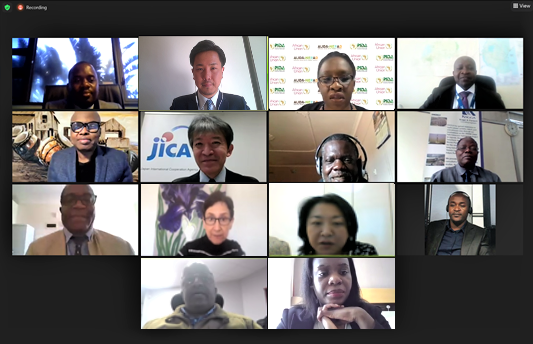
Training of Trainers Seminar on One Stop Border Post (OSBP) Design and Operations was co-hosted by the AUDA-NEPAD, EAC, and JICA as a virtual event on 28-29 July 2021. This event brought together over 110 participants including representatives from RECs, Member States, government agencies, companies, think tanks, and partner organisations to share learnings on OSBP design and operational elements in alignment with the AfCFTA and COVID-19. This seminar was held as a follow-up to the “Training of Trainers and Data Collection Seminar for RECs” held in July 2019 in Kigali. During that seminar, the EAC Secretariat requested to host another seminar to enable participants to have a first-hand look and feel of the architectural design and construction aspects of OSBPs.
Based on the request and considering the challenges posed by COVID-19, the virtual seminar consisted of three main sessions concerning key issues, including: architectural design and construction of OSBPs, criteria and consideration of the OSBP facilities, border operations to respond to increased trade volumes arising from the AfCFTA, health protocols to be mainstreamed within border functions, border waste management, enhancement of boarder security, and standardisation of tracking systems.
Opening Remarks:
Mr. Amine Idriss Adoum, Director of Programme Delivery and Coordination, AUDA NEPAD opened the seminar highlighting that development and provision of efficient hard and soft infrastructure provides a crucial platform for Africa to enhance economic productivity, facilitate trade, and accelerate industrialization and develop markets at the national, regional, continental, and international levels. In his remarks, Mr. Idriss Adoum informed delegates that AUDA-NEPAD and JICA are currently preparing on the review of the 3rd edition of the OSBP source book. Technical consultation meetings will, soon, be conducted targeted on Member States and RECs. He then went on to officially open the seminar and wished the delegates fruitful deliberations.
Mr. Minoru Homma, Chief Representative, JICA South Africa Office highlighted JICA’s collective efforts in Corridor Development and OSBP development in Africa, while emphasizing the importance of this seminar, which incorporates elements of COVID-19 and AfCFTA. In his remarks, Mr. Homma voiced JICA’s continuous support for the efforts by AUDA-NEPAD, RECs, and each country, with an emphasis on African ownership and sustainability, while referring to TICAD-8, which will be hosted by the Republic of Tunisia in 2022, as the second host country in Africa in its history.
Mr. Hosea Nyangweso, Principal Civil Engineer, on behalf of Director of Infrastructure Directorate, EAC Secretariat presented the importance of OSBP as a game changer in corridor performance by substantially reducing the passenger and cargo dwell time at the crossing points. In his remarks, Mr. Nyangweso provided an overview of 15 OSBPs in EAC region, referring the challenges including shortage of staff housing, which is vital for the achievement of 24/7 operations, and insufficient human resources of the border agencies. At the end of his remarks, he reiterated the significance of the TOT seminar more than 10 years after the opening of first functioning OSBP in Africa.
Session 1: Architectural Design and Construction of the OSBP
In answering the question as to what criteria and consideration in architectural design of the OSBP can be addressed in enhancing border efficiency and streamlining procedures, the presentation done by Peter Magambo, Tutu Kagga and John Matovu from EAC Secretariat, highlighted the following key issues in: architectural design criteria, examples of guiding legislation / manuals, OSBP facilities and their functionalities, COVID-19 impact on the flow of process relating private cars and public transport, and impact on the layout of the OSBP.
Key Outcomes:
This session discussed the OSBP facility and its functionality to extend beyond the realisation of functional OSBP to also take into account the contribution of smooth administrative flow to health, immigration, and custom procedures. There is a growing demand for OSBP to address the social and economic impacts linked to its border operations. However, design of the OSBP with trade facilitation and infectious disease countermeasures in mind remain a challenge; this requires building green OSBP that takes account of climate change and ensures access to sustainable utilities. There is an additional need to enhance border security while setting up screening mechanism in the context where threat of international terrorism is growing. While criteria and priority on OSBP layout are subject to vary at different contexts, designers need to continuously dialogue and engage with stakeholders to consider re-assessment of the layout before actual design is carried out.
Session 2: The role of OSBP- What can OSBP do in light of AfCFTA and COVID-19
Ms. Trudi Hatzenberg, Executive Director, Trade Law Centre (TRALAC) presented the importance of adoption of digital trade solutions move towards the improving border governance driven by ICT technology, including E-Payments and E-documentations with the launch of AfCFTA. In her presentation, Ms. Hartzenberg emphasised the significance of TOT seminar as an opportunity to share key developments and updates to support trade facilitation in the AfCFTA.
Mr. Amos Phiri, Consultant and Advisor on Transport presented an overview of additional design considerations in terms of:
- specific OSBP legal and regulatory framework, procedures and operational manuals and implementation framework
- staff housing and detached health ports
- efficient circulation of traffic and flexibility of layouts and designs for future expansion
- dedicated funding mechanisms for maintenance
Ms. Yuriko Doi, Deputy Director, JICA presented on new challenges found in Border Posts. In her presentation, she outlined the survey that was conducted in 44 border posts in EAC Member States. The following items were highlighted:
- objective of the survey – identifying needs and challenges for strengthening infectious disease response at the BPs and surrounding areas
- finding one – need for standardization
- finding two – gap in facilities
- finding three – gap in human resources
- finding four – waste management
Mr. Arnold Nkoma from EAC Secretariat highlighted the following key issues:
- how health protocols could be mainstreamed in the OSBP procedures
- provisions that could be put at OSBP facilities – sanitary facilities, temperature monitoring equipment and personal protective equipment.
Key Outcomes:
The panel looked at the importance of operational and procedural elements needed to foster health protocols, and to respond to increased cross-border trade volumes arising from the AfCFTA. Operations and procedures of the border posts are increasingly shifted to modernisation that driven by the ICT technology, including adoptions of digital trade solutions – e-payments, e-documentation. Focusing on standardisation of provision of the OSBP and making model procedures, while reflecting on how to better enforce health and security interventions at borders, will enable better and secured streamlining of procedures. Integrating health screening into the detached health port as a first clearance is needed to minimise the exposure of OSBP staff. It is also critical for border posts to address waste management and maintenance of border facility; this requires dedicated funding mechanism to ensure sustainable and resilient maintenance systems.
Session 3: Training of usage in infrastructure database on VPIC and AID
The Virtual PIDA Information Centre (VPIC) and African Infrastructure Database (AID) serve as repositories of data and e-platforms for information and knowledge sharing on infrastructure development. Mr. Ephrem Getahun, PIDA Information Management Specialist, AUDA-NEPAD provided training: ranging from enhancement the quality and improve the frequency of data collection on OSBP within the framework of PIDA projects, and technical flows of data addition/edition into AID to manage their metadata descriptions such as project characteristics, economic indicators, financial parameters, and implementation status.
Conclusion and key next step:
Training of Trainers Seminar on OSBP Design and Operations successfully managed to create a platform of engagement with highly committed leaders and experts in OSBP designs and operations. The training was also enhanced a mutual understanding for OSBP trainers, policymakers, and practitioners on priorities and issues of border governance post- and during the current COVID-19 pandemic. For the next steps, annual capacity building on OSBP is needed to address risks present in border posts spanning the African continent, together with regular engagement for OSBP users and border agencies to enhance clear understanding on the ground in the achievement of smooth and streamlined of procedures.

The Heads of State approved the 69 PIDA Priority Action Plan II projects during the Africa Union Heads of State and Government Summit held in February 2021. Subsequent to the approval, the African Union Development Agency (AUDA-NEPAD) held a technical meeting on the 5th and 6th of May 2021 to discuss the status of each of the PIDA PAP II Infrastructure projects.

As the lead coordinating agency for the PIDA PAP II projects, AUDA-NEPAD organized a two-day virtual technical meeting to discuss the list of PIDA PAP II projects. The meeting was attended by technical experts from PIDA stakeholders, African Union Commission (AUC), African Development Bank (AFDB) United Nations Economic Commission for Africa (UNECA), Regional Economic Communities (RECs), and Member States (Project Owners) to appraise the status of the projects and for AUDA-NEPAD to present the next steps on PIDA PAP II projects as well as present the PIDA instruments and accompanying strategies (i.e. Implementation Strategy, Financing Strategy, and Partnerships Strategy) that are used to support the acceleration of PIDA PAP II projects as well as discuss the status of each project.
The 69 PIDA PAP II projects discuss at the event, consist of 28 Transport Projects, 18 Energy Projects, 12 Water Projects, and 11 Information Communication Technology (ICT) projects. These projects were presented by the respective RECS and Member States (Project Owners) in parallel sessions arranged according to the REC. This enabled participants to gather more in-depth information through a wide lensed overview for each sector project and region. As part of the technical discussions at the event, AUDA-NEPAD, AfDB, and UNECA presented the PIDA PAP II Implementation Strategy, Financing Strategy, and Partnerships Strategy respectively to showcase how these projects will be supported by the organizations in the implementation phase.
AUDA-NEPAD further presented instruments such as the Job Creation Toolkit, Service Delivery Mechanism (SDM), PIDA Quality Label (PQL), Quick Check Methodology (QCM), and the Continental Business Network (CBN). These instruments were developed to accelerate the PIDA PAP projects implementation. Instruments like SDM are key instruments for AUDA-NEPAD to drive project acceleration and strategic alignment for project implementation. Further information about these instruments can be found on Virtual PIDA Information Centre (VPIC), an online central platform used by PIDA to share information on PIDA Projects to all public users.
The virtual event successfully managed to create a platform of engagement for all participants to understand the status of each project presented. A clear and understandable process for PIDA PAP II was defined and an opportunity was presented for project sponsors to cooperate with PIDA Stakeholders to advance the projects. The event has enhanced a better and a clear understanding of the role of AUDA-NEPAD, together with Partners, Stakeholders, in the advancement of PIDA PAP II projects as well as highlighted the need of each project.

The Assembly of the African Union Heads of State and Government adopted, in its 34th Ordinary Session on 7 February 2021, the strategic documents submitted by the Department of Infrastructure and Energy related to the Second Phase of the Program for Infrastructure Development in Africa (PIDA PAP2, 2021-2030). The strategic documents include PIDA PAP2 implementation strategy, financing strategy, and partnership strategy for sixty-nine (69) regional infrastructure projects in the sectors of Energy, Transport, Trans-Boundary Water, and Information and Communication Technology (ICT), with an estimated budget of 161 Billion USD. These projects were selected from a long list of over 240 projects proposed by Member States, Regional Economic Communities (RECs), and Specialized African Institutions. The long list was the subject of extensive consultations from December 2018 and throughout 2020 and were prioritised according to new criteria which include rural connectivity, economic viability, financial attractiveness, climate friendliness, gender sensitive and smart infrastructure. The alignment of projects to the integrated corridor approach has been ensured during the submission and selection process through the corridor overlap and the inclusiveness and sustainability criteria. At a more strategic level of arbitration, projects which contribute to integration across regions and AUC flagships and Agenda 2063, especially those facilitating the implementation of the African Free Trade Area (AfCFTA) and the Free Movement of Goods and People, have been prioritized.
The selection of projects of the second phase of PIDA also ensured equitable distribution by African region and by sector and focused on preparedness and fast-tracked approaches.
It is estimated that, upon the implementation of PIDA PAP II projects, the outcomes include modal switch from road to rail transport and inclusion of fluvial navigation in more competitive and climate friendly multimodal transport systems, key contributions to establishment power pool interconnection as a first step to the African Single Energy Market (AfSEM), development of high impact multipurpose dams to achieve sustainable rural livelihoods and climate resilient agriculture, and using ICT infrastructure to develop value added services, boost digitalization and create jobs for youth. PIDA PAP 2 is expected to play a key role through the immediate impact of the construction activities, job creation and also boost industrialization and trade through provision of utilities and competitive transport and logistics services enabled by multi modal infrastructure.
The Heads of States and Governments meeting has also adopted the roadmap, policy and governance structure of the African Single Electricity Market (AfSEM). AfSEM is aims to facilitate a sustainable development of the African electricity sector through the integrated continental electricity market on the basis of the 2019 African Continental Free Trade Area Agreement (AfCFTA). AfSEM will serve as key instruments under AfCFTA to foster conditions for economic growth and stability, while facilitating cross-border electricity trade. Under this scenario AUC is collaborating with pan-African and regional Energy institutions to operationalise the Electricity Market harmonization agenda by developing working documents, policy papers, roadmap and governance structure. The common policies for the organisation and functioning of the AfSEM are based on the existing policies governing the regional markets under RECs and the national markets within the AU Member States and have been designed to give confidence to investors and ensure that the supporting regulatory frameworks are robust, credible, and transparent to support investment and unlock trading opportunities that will enhance the socio-economic development of the African continent.
According to African Union Commissioner for Infrastructure and Energy, H.E. Dr Amani Abou-Zeid, post-COVID-19 recovery requires the fast-tracking of Africa’s infrastructure development to improve resilience and improve livelihoods and economies. “The COVID-19 pandemic also accelerated digitalisation, exposed the gaps in energy in rural areas and the gender divide, and highlighted the need to develop infrastructure that is smart, climate resilient, inclusive and sustainable”, said Dr. Abou-Zeid, African Union Commissner for Infratsructure and Energy.

About the Programme for Infrastructure Development in Africa (PIDA)
The Programme for Infrastructure Development in Africa (PIDA) is an African Union Commission initiative, in partnership with the African Union Development Agency (AUDA-NEPAD), the African Development Bank (AfDB) and the United Nations Economic Commission for Africa (UNECA). This continental programme is designed to address the infrastructure deficit in transport, energy, ICT and transboundary water sectors. PIDA provides a common continental strategic framework and blue-print for inter-connecting and integrating Africa through priority infrastructure programmes and projects for African stakeholders to build the infrastructure necessary for more integrated transport, energy, ICT and trans-boundary water networks to unleash Africa’s economic and social transformation, boost trade, spark growth and create jobs and re-position Africa as a modern, competitive and vibrant continent, in line with the AU Agenda 2063 aspirations and goals.
The Second phase of PIDA has benefitted from the learning from phase 1 for over a decade (2012-2020). PIDA PAP II design and process have achieved (i) a high degree of country ownership and national prioritisation, (ii) a strategic approach to regional cross border infrastructure development, (ii) focus on projects with a well-defined scope which can independently reach financial close and be implemented in the short to medium term.
About the Africa Single Electricity Market (AfSEM)
The Africa Single Electricity Market (AfSEM) is the initiative of AUC. AfSEM is initiated to be the common language, the common energy governance system establishing the market operation over the continental-wide, interconnected electricity infrastructure. The goal is to give African households and businesses more secure, sustainable, reliable, competitive and affordable energy.The creation of AfSEM at the continental level started in 2015 in cooperation with the EU, to date, the AfSEM Policy Paper, the Roadmap and the governance structure were prepared by the team of EU-TAF Experts coordinated by the Department of Infrastructure and Energy, validated by RECs, Power Pools and other Pan African Energy Institutions. AfSEM is designed to bring greater energy security, sustainability and competitiveness to Africa Member states, it will be the largest single Electricity Market in the World covering 55-member states serving 1.5 Billion population, AfSEM will be the most cost-efficient response for strong growth of electricity demand in Africa, most essential tool to use full potential of the continent’s Renewable Energy Sources, and an Effective accelerator to 100% access of electricity in the continent. It is planned to launch the AfSEM in March, 2021. and to be fully operational by 2040.