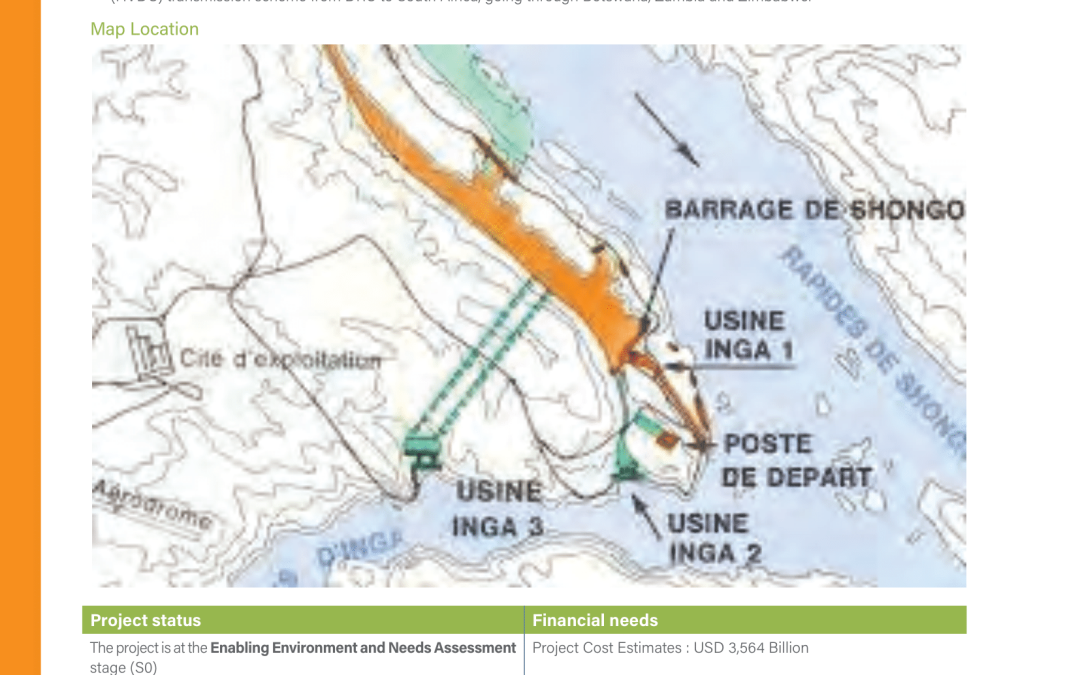
The project involves conducting the feasibility studies in respect of the design, development, operation and maintenance of a High Voltage Direct Current (HVDC) transmission scheme that will deliver 5,000 MW of electricity to South Africa under the Inga 3 Low Head Project. The HVDC transmission Scheme will traverse Zambia, Zimbabwe and/or Botswana (Transit Countries). The project objectives are to:
• Undertake feasibility studies in respect of the design, development, operation and maintenance of a High Voltage Direct Current (HVDC) transmission scheme from DRC to South Africa, going through Botswana, Zambia and Zimbabwe.
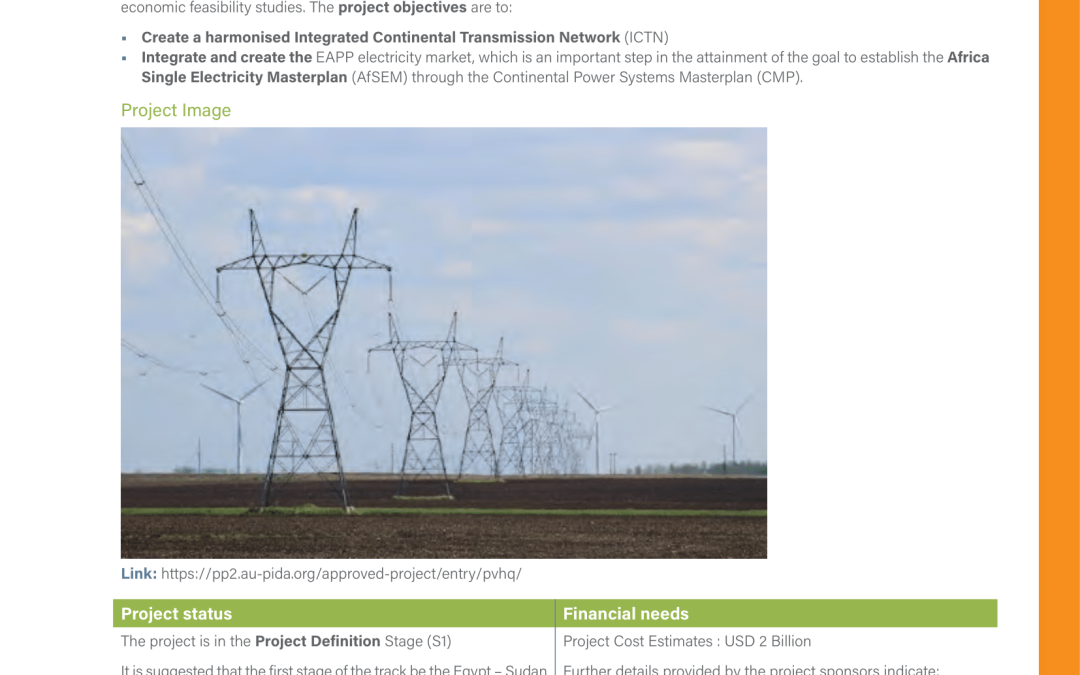
A Direct Current Transmission Line to transmit 2 000 MW with 1 000 K.V. Voltage from Cairo (Egypt) to Khartoum and Gedaref (Sudan), as the first phase of the giant electrical interconnection grid parallel to the continental road Cairo – Cape Town which is suggested to use a mixture of alternating current (AC) and direct current (DC) solutions according to the results of technical and economic feasibility studies. The project objectives are to:
- Create a harmonised Integrated Continental Transmission Network (ICTN)
- Integrate and create the EAPP electricity market, which is an important step in the attainment of the goal to establish the Africa.
- Single Electricity Masterplan (AfSEM) through the Continental Power Systems Masterplan (CMP)
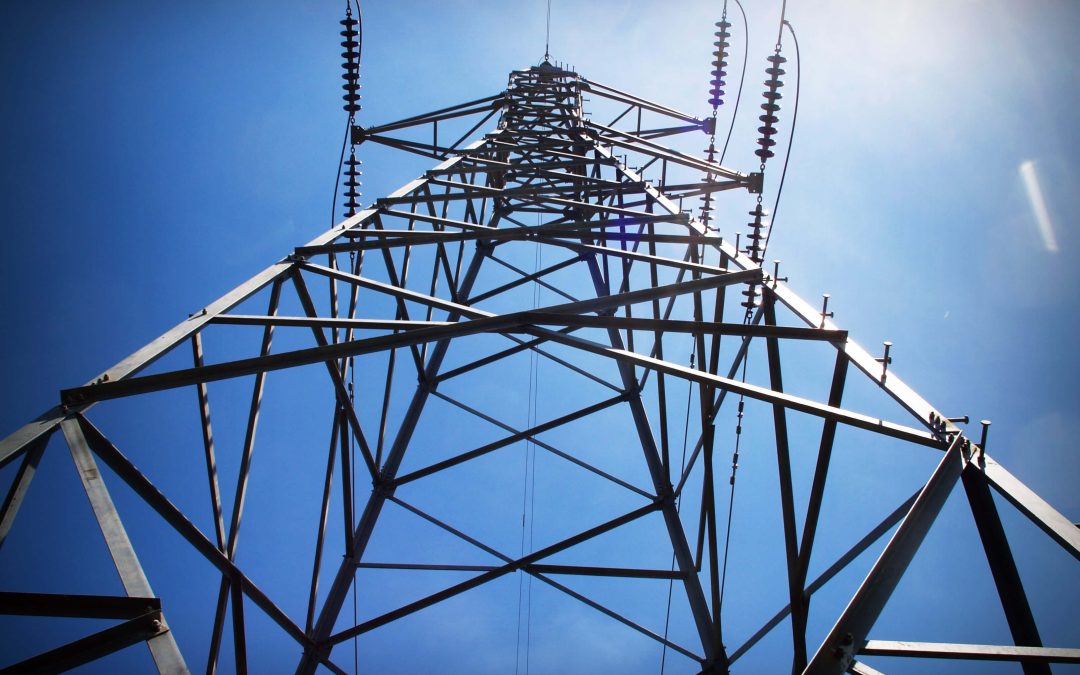

This stage covers about 165 km from Saloum (Egypt) to Tobruk (Libya) to complete the North Regional Electrical Interconnection. An alternating current (AC) transmission line of about 165 km to exchange a capacity of (1000) megawatts with a voltage of (500/400) kV (Saloum (Egypt) 500 kV – Tobruk (Libya) 400 kV), with a back-to-back 500/400 kV converter station rated 1 000 MW. The project objectives are to:
• Facilitate the interconnection between the local/national networks/grids of the North African countries by using the combination of alternating current (AC) and direct current (DC) transmission lines, and connections to HV national networks
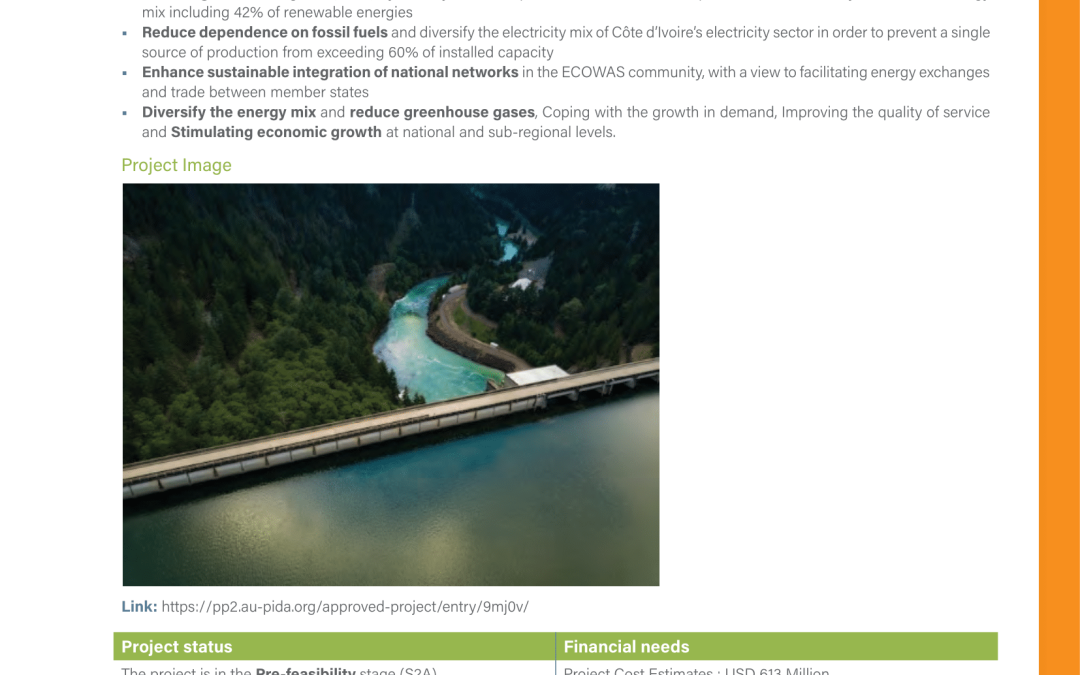
Among the priority projects included in the ECOWAS Master Plan for the Development of Regional Means of Production and Transmission
of Electric Power 2019-2033 is the Louga 1 and 2 hydroelectric power plant project. 297.6 million m3 • Construction of a dam 1 683 m
long and 30m high • Installation of 3 bulb-type groups totaling 126 MW. The project objectives are to:
• Reduce greenhouse gases (GHG) by 28% by 2030 compared to 2014 which corresponds for the Electricity Sector to an energy
mix including 42% of renewable energies
• Reduce dependence on fossil fuels and diversify the electricity mix of Côte d’Ivoire’s electricity sector in order to prevent a single
source of production from exceeding 60% of installed capacity
• Enhance sustainable integration of national networks in the ECOWAS community, with a view to facilitating energy exchanges
and trade between member states
• Diversify the energy mix and reduce greenhouse gases, Coping with the growth in demand, Improving the quality of service
and Stimulating economic growth at national and sub-regional levels.
EN-NEPAD-PIDA-PAP2-Project-Prospectus-Web-1-92_48-48
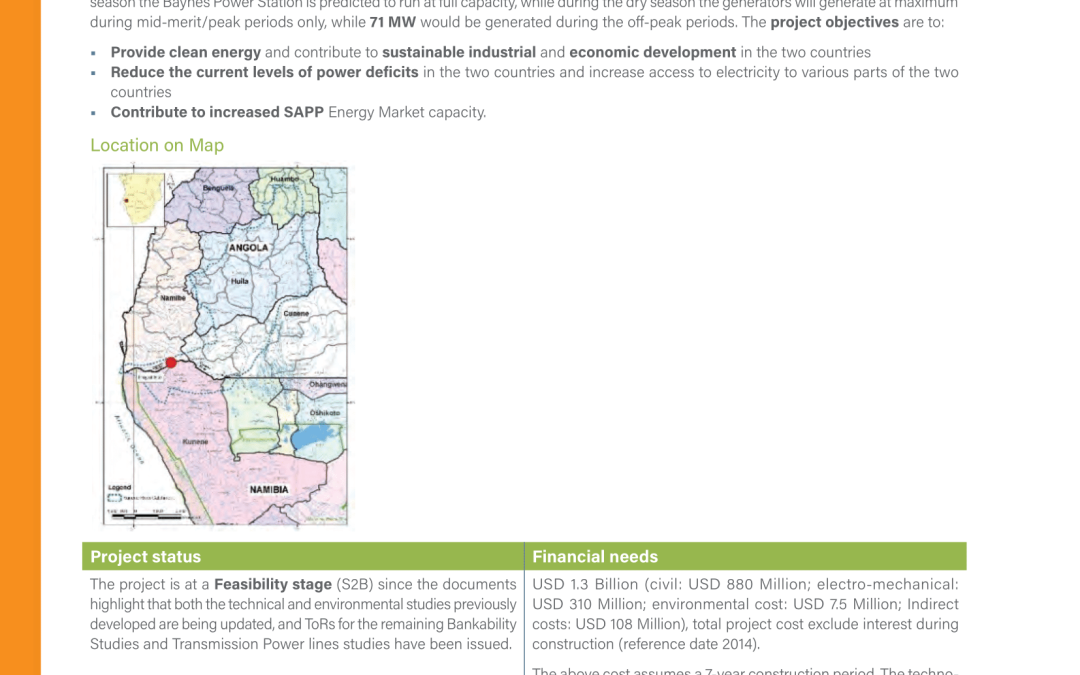
The Baynes HydropowerpProject is a joint project between Angola and Namibia. The project involves the construction of a hydropower dam on the Cunene River, 48 km downstream of the Epupa Falls. It is envisaged that the Baynes mid-merit/peaking power station’s capacity will be in the range of 600 MW, which will be shared equally by Namibia and Angola. Like the Ruacana Power Station, the new dam will function as a mid-merit peaking station, which will help to offset costly power imports during peak hours. During the wet season the Baynes Power Station is predicted to run at full capacity, while during the dry season the generators will generate at maximum during mid-merit/peak periods only, while 71 MW would be generated during the off-peak periods. The project objectives are to:
• Provide clean energy and contribute to sustainable industrial and economic development in the two countries
• Reduce the current levels of power deficits in the two countries and increase access to electricity to various parts of the two countries
• Contribute to increased SAPP Energy Market capacity.